Boiler Replacement
Old Boiler Out · New Boiler In · Every Connection · Every Zone · Fully Tested. Licensed boiler specialists replacing aging systems across Bellingham, Mount Vernon & Anacortes.
When Repair Costs More Than It's Worth, It's Time for a New Boiler
Every boiler reaches a point where repair no longer makes sense. The heat exchanger cracks. Parts become obsolete. Efficiency drops below 70 percent. Repair bills stack up every winter. The system runs constantly but barely keeps up. When your boiler crosses that line, replacement isn't just the smarter financial decision, it's the safer one. A cracked heat exchanger leaks carbon monoxide. A failing system wastes hundreds in fuel every season. And the next breakdown will come at the worst possible time.
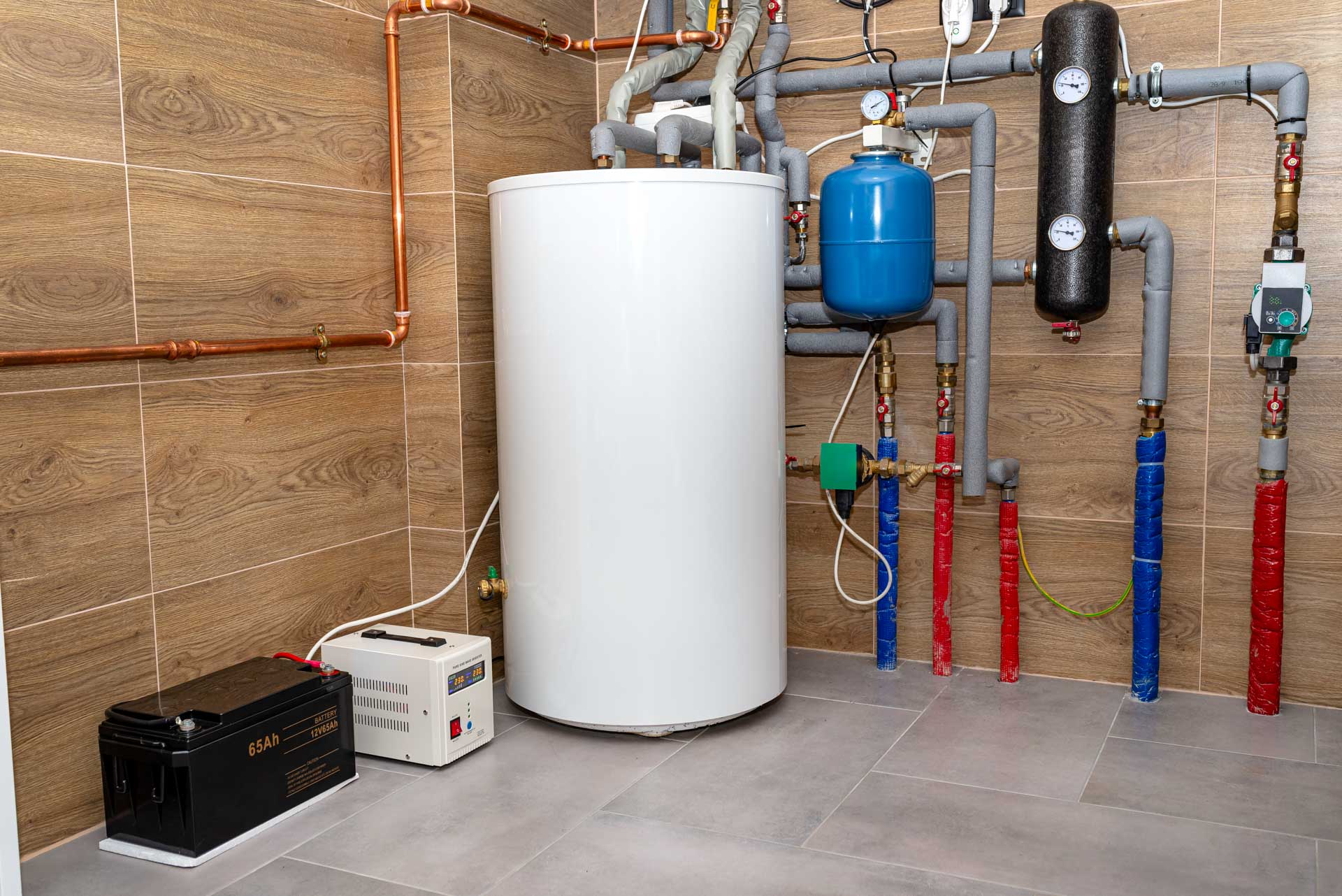
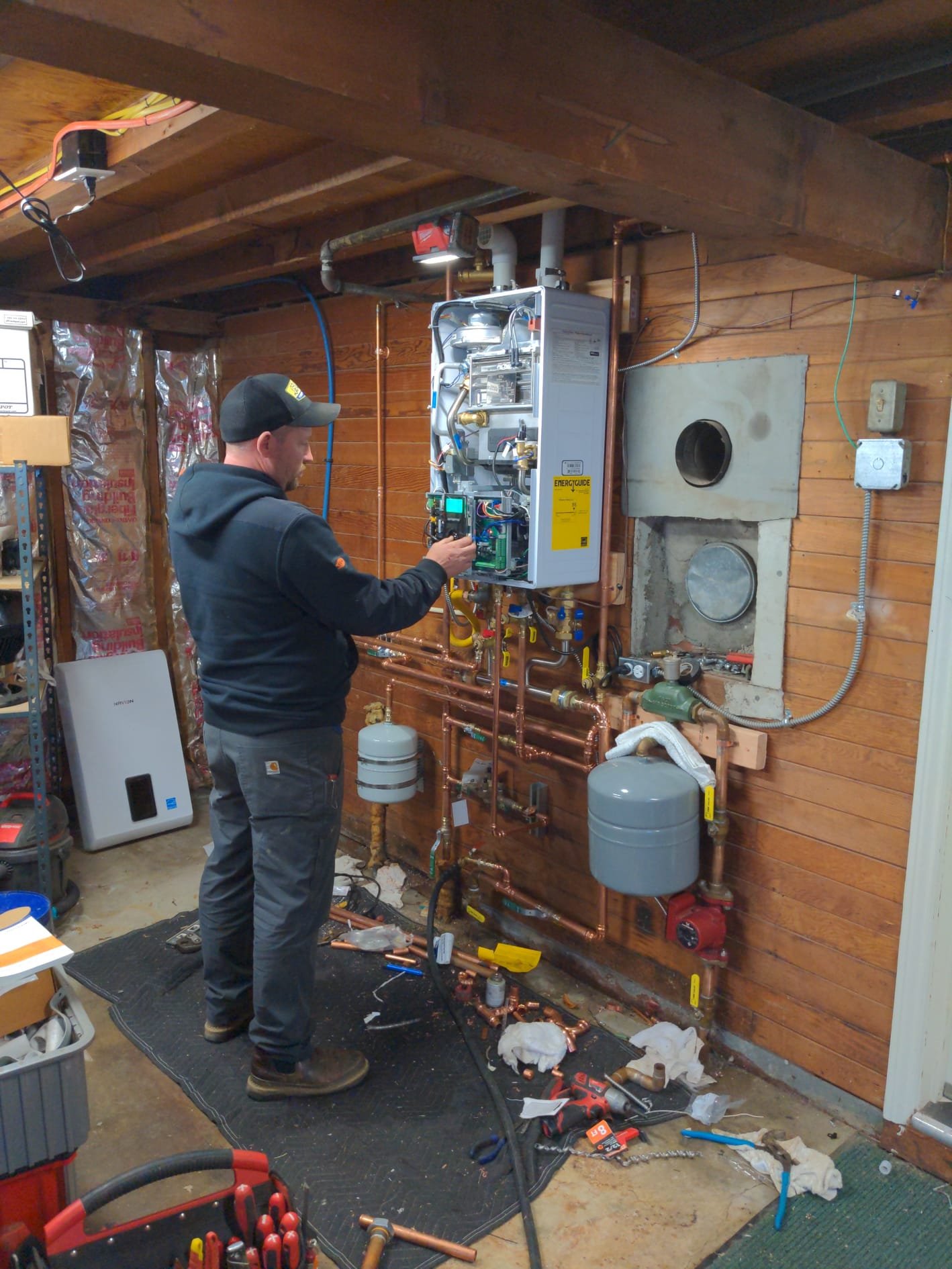
LaVergne's handles complete boiler replacement including old boiler draining, disconnection, and removal; new boiler sizing and selection; gas line reconnection; venting; hydronic piping reconnection; zone valve and circulator pump inspection or upgrade; expansion tank replacement; system pressurizing and bleeding; combustion testing; and permit coordination across Bellingham, Mount Vernon, Anacortes, and surrounding areas.
What to Look for in a Boiler Replacement Specialist
Boiler replacement is not a simple swap. The old unit must be safely drained, disconnected from gas and venting, and removed. The new boiler must be properly sized, positioned, connected to gas, vented to code, piped into the existing hydronic loop, wired to zone controls, pressurized, bled, combustion tested, and inspected. A shortcut at any step creates safety hazards and system failure.
Why LaVergne's?
We check every box. Replacing boilers since 1951.
- Licensed & Insured (#LAVERPH798NZ)
- 75+ Years of Boiler Swaps
- Proper Heat Loss Sizing
- Full Removal & Disposal
- 5 Star Customer Reviews
- Permit & Inspection Coordination
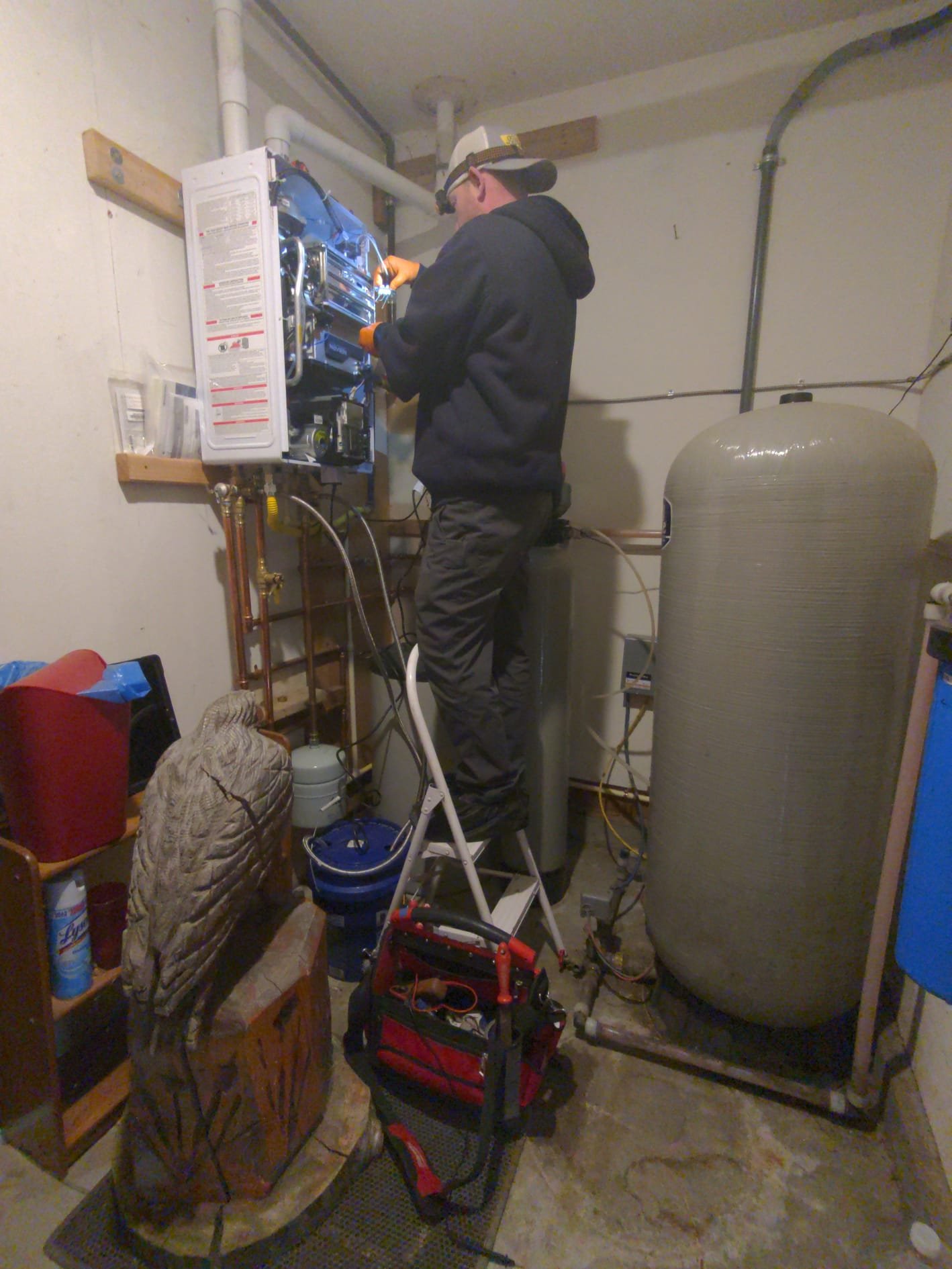
Boiler Replacement Services
Six replacement service areas covering every step from evaluation to commissioning, handled start to finish by licensed boiler specialists.
Evaluation & Sizing
On site evaluation of your existing system. Heat loss calculation, BTU sizing, boiler type recommendation, zone assessment, efficiency comparison between standard and condensing options, and detailed written quote.
Evaluate →Removal & Disposal
Old boiler safely drained, gas disconnected, venting removed, hydronic piping capped, unit disconnected from electrical and controls, physically removed from the home, and properly disposed of or recycled.
Remove →Standard Boiler Swap
New gas boiler positioned, gas line reconnected, venting installed, hydronic supply and return piped, expansion tank installed, zones reconnected, system pressurized, air bled, combustion tested, and heat verified to every zone.
Replace →Upgrade to Condensing
Replacing a standard boiler with a high efficiency condensing unit. New PVC or polypropylene venting, condensate drain routing, outdoor reset controls, modulating burner setup, and efficiency optimization for maximum savings.
Upgrade →Zone & Component Upgrade
During replacement, inspecting and upgrading aging zone valves, circulator pumps, expansion tanks, thermostats, and piping connections. The smartest time to upgrade supporting components is when the boiler is already being swapped.
Upgrade →Permits & Commissioning
Mechanical and gas permit applications, fee coordination, inspection scheduling, combustion analysis documentation, system commissioning report, and warranty registration for the new boiler unit.
Complete →Ready to Replace Your Old Boiler?
Complete boiler replacement across Bellingham, Mount Vernon, Anacortes and all surrounding areas.
Signs Your Boiler Needs Replacement
Not every boiler problem means replacement. But some signs point clearly to a system that has reached the end of its useful life. Continuing to repair a boiler past this point costs more money, wastes more fuel, and creates more risk than replacing it. Here are the four clearest signs.
We evaluate your system honestly and tell you whether repair or replacement makes more sense. If replacement is the answer, we size the new boiler to your actual heat loss and handle every step from removal to commissioning.
Over 25 Years Old
Most boilers reach end of life between 20 and 30 years. After 25 years, efficiency drops significantly, parts become scarce, and the risk of heat exchanger failure and carbon monoxide exposure increases sharply.
Evaluate →Frequent Repairs
If you're calling for boiler repair every winter or two, the total cost of those repairs is approaching or exceeding the cost of a new system. A new boiler ends the cycle and comes with a full warranty.
Compare →Cracked Heat Exchanger
A cracked heat exchanger leaks carbon monoxide into your living space. This is the one repair that almost always means replacement. The cost of a new heat exchanger on an old boiler rarely makes financial sense.
Assess →Rising Fuel Bills
If your fuel costs are climbing but your usage hasn't changed, your boiler's efficiency has dropped. An old boiler operating at 65 to 70 percent wastes 25 to 30 cents of every fuel dollar. A new system pays for itself.
Save →
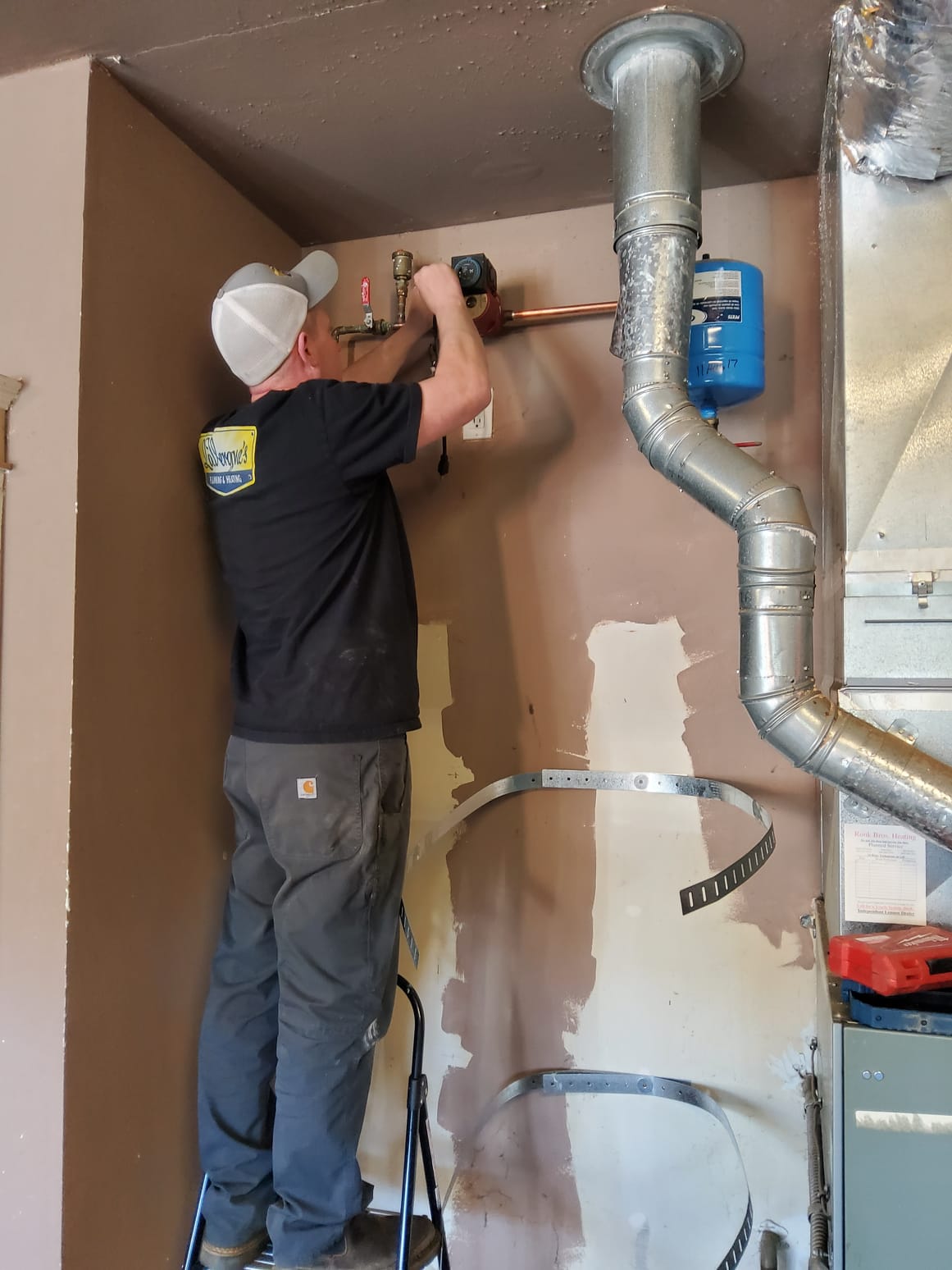
Why Professional Boiler Replacement Matters
Boiler replacement involves draining and removing a heavy pressurized vessel, disconnecting gas and venting, sizing and positioning a new unit, reconnecting gas lines, installing new venting to code, piping into the existing hydronic loop, wiring zone controls, installing a new expansion tank and safety devices, pressurizing and bleeding the system, performing combustion analysis, and passing inspection. Every step must be done correctly.
A boiler that is oversized short cycles, wastes fuel, and wears out prematurely. One that is undersized never reaches comfort. Improper venting creates carbon monoxide hazards. Bad piping connections leak. Incorrect expansion tank sizing causes dangerous pressure swings. Licensed boiler specialists eliminate every one of these risks.
Proper Sizing
Heat loss calculated, not guessed
Full Code
Gas, venting, piping, permits
Commissioned
Every zone tested and balanced
Boiler Replacement FAQs
Common boiler replacement questions answered by our licensed specialists serving Whatcom and Skagit Counties.
How much does boiler replacement cost?
Residential boiler replacement typically runs $4,000 to $10,000 depending on boiler type, BTU rating, number of zones, and piping complexity. Upgrading to a high efficiency condensing boiler costs more upfront but saves significantly on fuel. We provide a detailed written quote.
How long does a boiler replacement take?
Most residential boiler replacements are completed in 1 to 2 days. If zone valves, circulator pumps, or piping need upgrading during the swap, it may extend to 2 to 3 days. We provide exact timing with your quote.
Should I upgrade to a condensing boiler?
Condensing boilers operate at 90 to 98 percent efficiency versus 80 to 85 for standard. They cost more upfront but reduce fuel bills by 15 to 30 percent annually. If you plan to stay in your home long term, the payback is typically 3 to 5 years.
Do you remove and dispose of the old boiler?
Yes. Every replacement includes draining, disconnecting, physically removing the old boiler from your home, and proper disposal or recycling. We handle everything so you don't have to.
Will my existing zones still work?
Yes. We reconnect every existing zone to the new boiler and verify heat to each one. During the swap, we also inspect zone valves, circulator pumps, and thermostats and recommend upgrades for any components that are near end of life.
Do I need a permit for boiler replacement?
Yes. Most jurisdictions in Whatcom and Skagit Counties require mechanical and gas permits for boiler replacement. We handle all permit applications, fee coordination, and inspection scheduling as part of our service.
How do I know if I need replacement vs repair?
If your boiler is over 25, has a cracked heat exchanger, requires repairs every winter,