
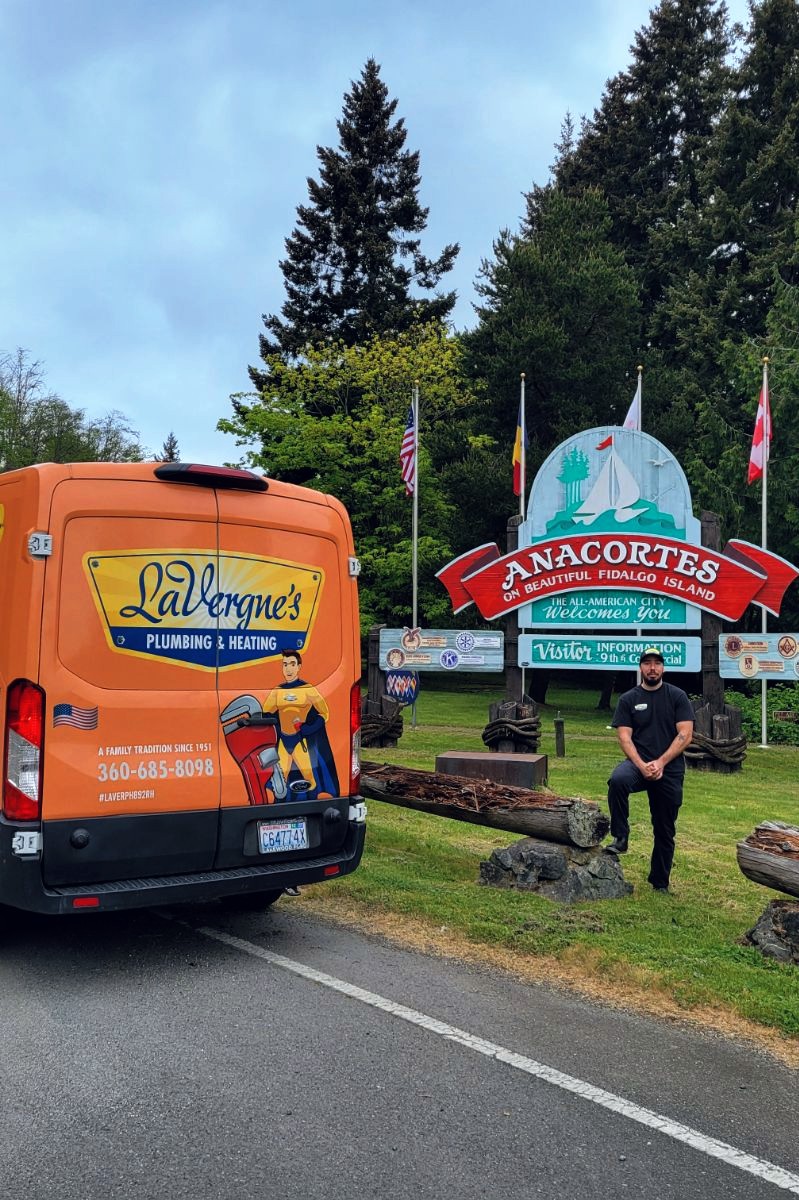
Main Water Line Repair
The line between your water meter and your house is the one pipe you can't see, can't shut off room-by-room, and can't ignore. When it fails, we locate the break precisely, dig only where needed, and restore full supply — often the same day.
The Most Important Pipe You've Never Seen
Every drop of water your household uses travels through a single buried line running from the utility meter (or your well) to the house. In most local jurisdictions, everything on the house side of that meter is the homeowner's responsibility — the utility's obligation typically ends at the meter itself. So when that line cracks, separates at a fitting, or gets crushed by a root, the repair, the water loss, and the soggy yard all land on you.
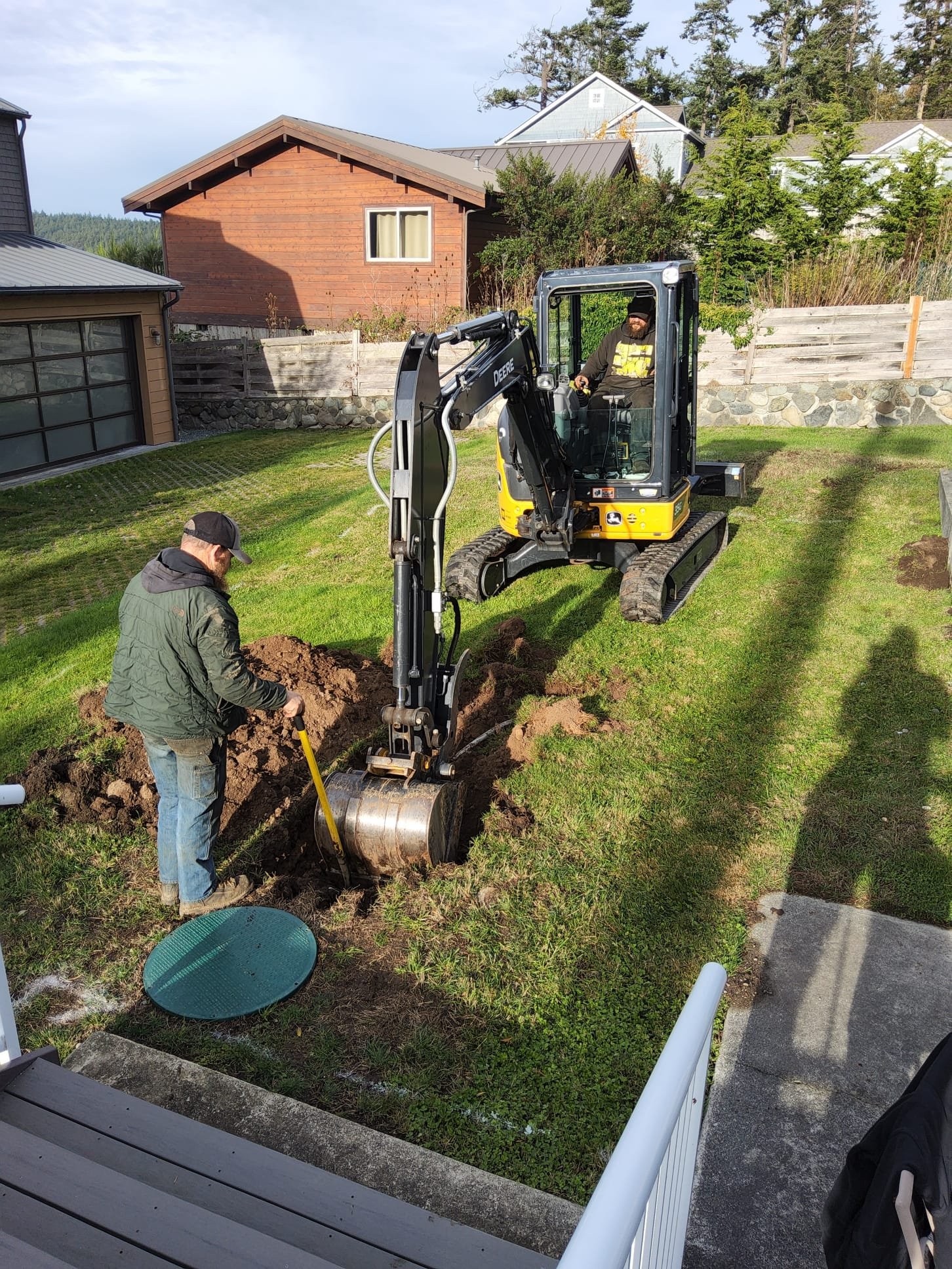
The good news is that a main line failure is usually a localized problem with a localized fix. Our approach starts with locating the break precisely — using acoustic detection and line tracing rather than exploratory digging — so the excavation is a surgical opening over the failure, not a trench across your entire yard. We then repair the damaged section with materials matched and properly transitioned to your existing line, pressure-test the repair, and restore the site. Homeowners from Blaine to Burlington are often surprised how contained a well-executed line repair can be.
What a Proper Underground Repair Requires
Underground repairs fail for predictable reasons: wrong fitting for the pipe material, no proper bedding under the repair, backfill compacted straight onto the joint, or a coupling rated for a material the line isn't actually made of. Rural and older properties around Whatcom and Skagit County carry a mixed inventory of buried line — polyethylene, PVC, old galvanized, even remaining runs of copper — and each demands a different transition and repair method. Getting that right the first time is the difference between a permanent fix and a callback in eighteen months.
We work with utility locating before excavation — gas, power, and communication lines share your yard.
Poly, PVC, galvanized, and copper each require specific couplings and transitions. We stock and use the right ones.
Repairs are bedded and backfilled to protect the joint — because a repair crushed by settling soil isn't a repair.
If the line's condition means this break won't be the last, you'll hear it straight — with numbers for both paths.
Why LaVergne's?
Problems That Travel With Line Breaks
A failed service line often has company — or reveals something bigger. These are the services most often connected to a main line call.
Main Water Line Replacement
When the break is one symptom of a line that's failing along its whole run, full replacement is the honest recommendation — here's what that involves.
Learn More →Leak Detection
Not sure whether the wet spot is supply, drainage, or groundwater? Diagnostic detection answers the question before anyone digs.
Learn More →Burst Pipe Repair
Line failures inside the home need the same urgency with different methods. Our emergency team handles both sides of the foundation.
Learn More →Well Pump Repair
On well systems, what looks like a line break sometimes traces back to the pump or pitless adapter. We diagnose the whole system, not just the pipe.
Learn More →Outdoor Plumbing
Hose bibs, yard hydrants, and irrigation tie-ins all connect to your service line — and all deserve the same below-grade standards.
Learn More →Emergency Plumbing
Water you can't shut off is an emergency by definition. Our 24/7 team answers when the timing is worst.
Learn More →Yard Squishy Where It Shouldn't Be?
Every hour a service line leaks, you're paying for water that never reaches the house. Let's find it today.
How a Failing Service Line Shows Its Hand
Because the service line is buried, it fails out of sight — but never without symptoms. The evidence shows up in your yard, at your fixtures, and on your bill, usually in combination. In our region's saturated winter soils, some of these signs get dismissed as "just the rain," which is exactly how a small break gets months to become a big one. Here's what deserves a closer look.
One Soggy Patch That Won't Dry
A persistently wet or unusually green strip along the meter-to-house path — even in dry weather — is classic break evidence.
Pressure Drop at Every Fixture
Low pressure at one faucet is a fixture problem. Low pressure everywhere at once points to the line feeding all of them.
Meter Spinning, House Off
Shut off water at the house-side valve. If the meter still moves, the leak lives in the buried line between the two points.
Dirt or Air in the Water
Sputtering faucets or sediment after outages can mean the line is drawing in soil and air through a breach when pressure drops.
Main Water Line Repair FAQs
Helpful answers about Main Water Line Repair from the experienced team at LaVergne's.
Who's responsible — me or the water utility?
In most local jurisdictions, the utility owns and maintains everything up to and including the meter, and the homeowner owns the service line from the meter to the house. That means breaks on your side are your repair, even though the pipe is invisible and you didn't install it. If it's ever unclear where the failure sits, we can help determine which side of the meter the problem is on before you commit to anything.
What actually breaks these lines?
The usual suspects locally: tree and hedge roots crushing or shifting pipe over decades, soil movement in our wet-dry cycles working joints apart, corrosion in older galvanized runs, and occasionally damage from past digging that took years to fully fail. The pipe's age and material usually decide which one got yours.
How do you find the break without digging up the yard?
We trace the line's path, then use acoustic detection to hear pressurized water escaping underground — a distinct sound that lets us mark the failure within a small radius. The excavation is then sized to the repair. The find-first approach is the entire difference between a small patch of disturbed lawn and a trench.
Will I be without water during the repair?
Only during the active repair window. For a typical single-point break, water is shut off while we cut out and replace the damaged section — usually a matter of hours, not days — and restored as soon as the repair passes its pressure test. We'll give you a realistic window before we start.
Can a service line be repaired in winter?
Yes. Wet season is actually our busiest time for line work, because saturated soil pushes marginal pipes to failure and makes leaks visible. Excavation takes more care in saturated ground, but waiting until summer just means months of water loss. We repair lines year-round across Whatcom and Skagit County.
When is repair the wrong answer?
When the material itself is done. A break in an otherwise sound poly or PVC line deserves a repair. A break in a 60-year-old galvanized line that's corroding along its full length is a preview, not an anomaly — and paying for excavation twice hurts more than doing it once. We'll show you the pipe we pull out so the decision is based on evidence you can see.