
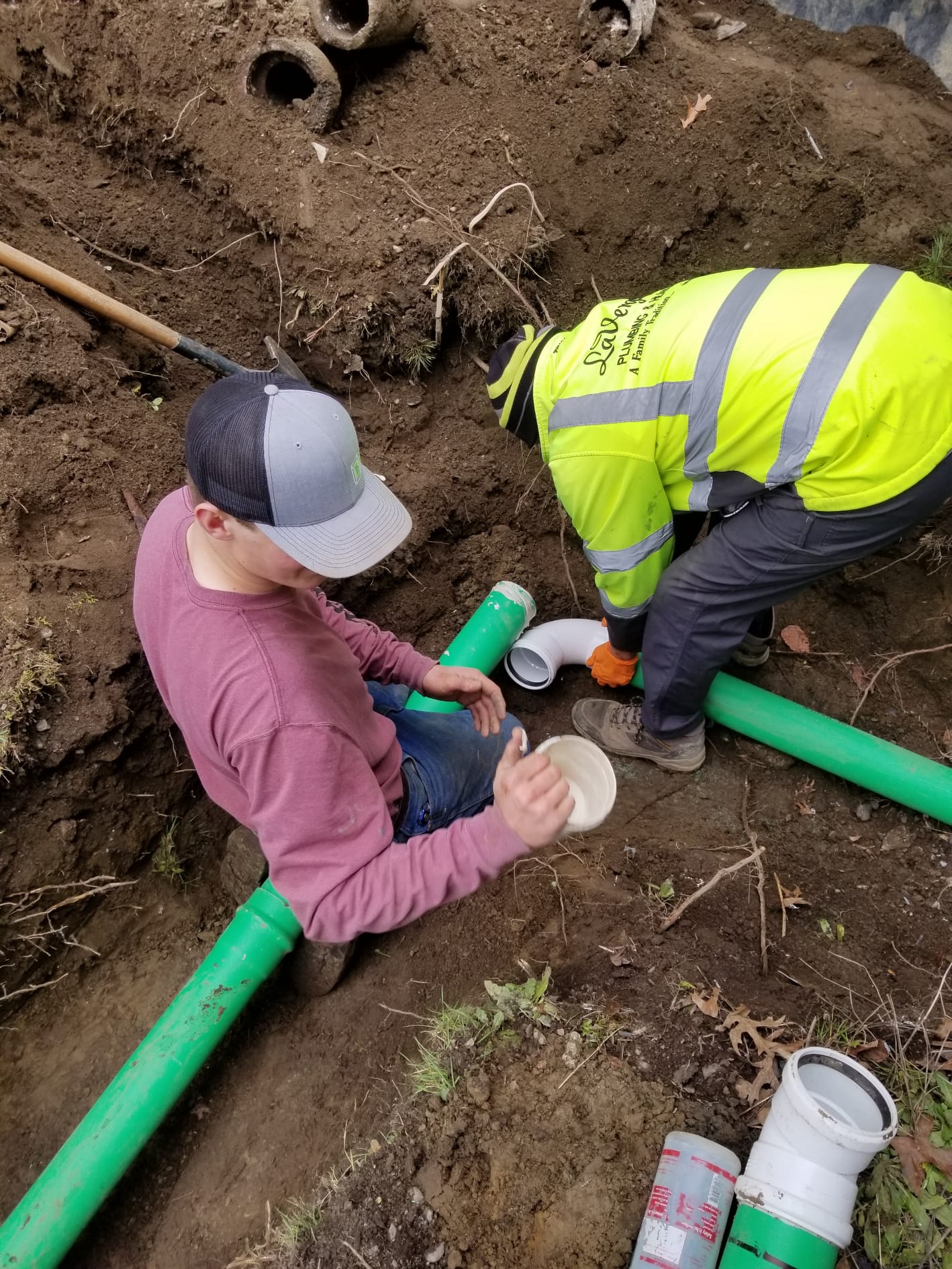
Sewer Camera Inspection
A hundred dollars of camera footage regularly saves homeowners thousands in work they didn't need — or reveals problems no surface inspection could catch. Either way, you stop guessing about the one pipe you can't see.
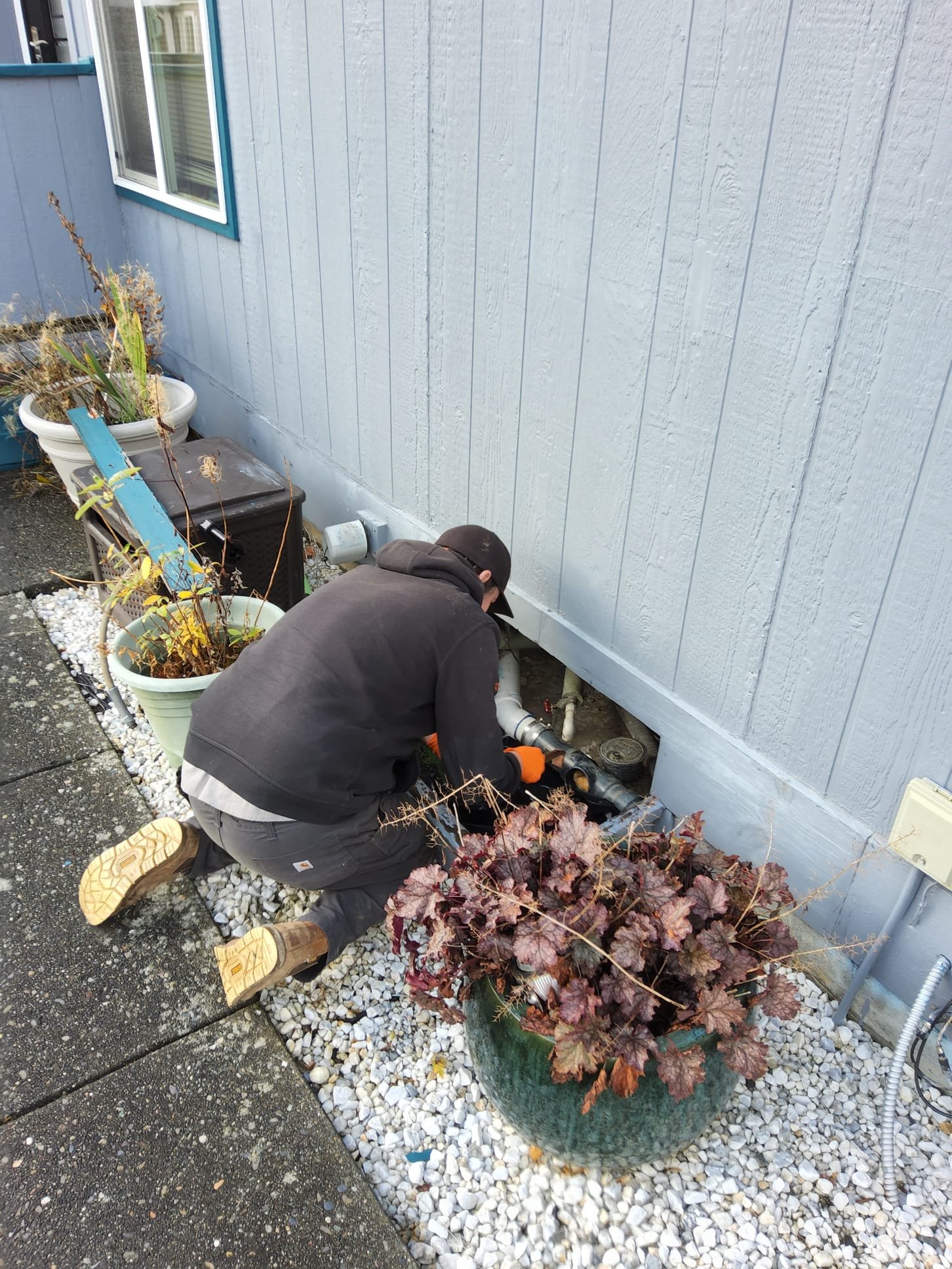
The Only Way to Actually Know a Sewer Line's Condition
Everything else is inference. Slow drains, odors, patterns of backups — these are symptoms consistent with a dozen different causes, ranging from a wad of wipes to a collapsed pipe. A camera inspection replaces inference with observation: a self-leveling HD camera travels the full run from your cleanout to the city main or septic tank, transmitting live video while a locator tracks its exact position and depth from the surface. When the camera finds a defect, we mark it — not roughly, but to the foot.
The inspection ends with you owning the evidence. You watch the footage with us, you get the recording, and you get a written summary of what's at which distance: root intrusion at 34 feet, a slight belly at 51, a clean line the rest of the way. That precision changes decisions. Homeowners around Ferndale, Custer, and Mount Vernon have used our inspections to spot-repair a single joint instead of replacing a whole line — and, just as often, to walk into a home purchase knowing exactly what's under the lawn.
The Camera Is Easy. Interpreting It Isn't.
Anyone can push a camera down a pipe. The value is in the judgment behind the lens: distinguishing a cosmetic crack from a structural one, a normal joint offset from a separating coupling, a shadow from standing water that signals a belly. It's also in knowing when the line needs cleaning before it can be honestly assessed — footage of a dirty pipe hides as much as it shows. And it's in the integrity to say "your line is fine" when it is, because an inspection company that profits from what it finds has an obvious temptation problem. Our answer to that is simple: you see everything we see, recorded.
If buildup obscures the pipe walls, we say so and recommend jetting first — never a diagnosis from murky footage.
Cosmetic, monitor, or act-now — each finding is classified so you know what's urgent and what isn't.
Every significant defect is marked above ground with depth noted, so any future repair digs once, in the right spot.
The footage is yours — for second opinions, insurance, real estate negotiations, or your own records.
Why LaVergne's?
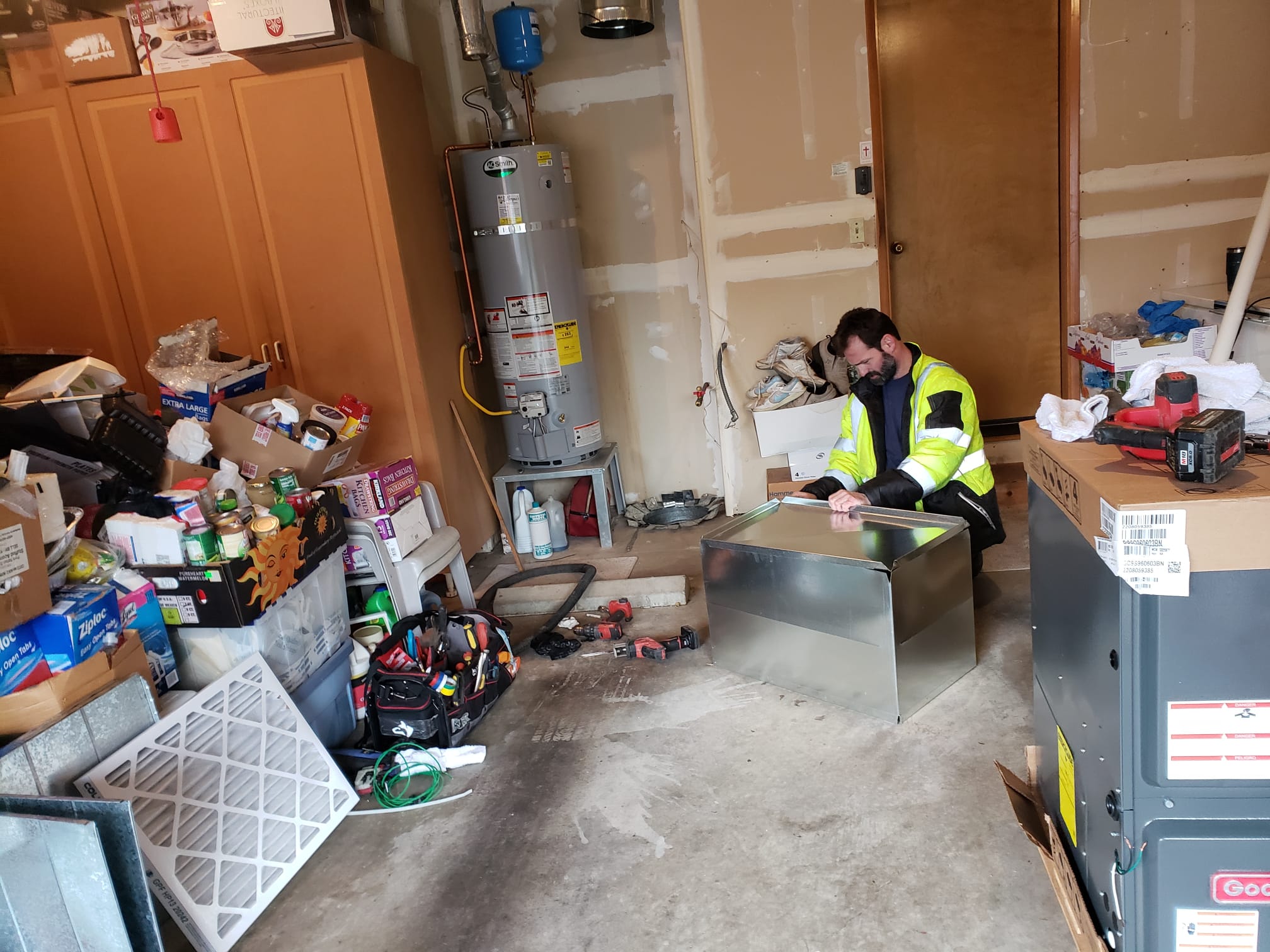
Every Path an Inspection Can Take
The camera doesn't just find problems — it right-sizes the solution. These are the outcomes an inspection typically points toward.
Rooter Service
Root intrusion in otherwise sound pipe is a maintenance finding, not a construction project. Cutting and clearing restores flow for years.
Learn More →Hydrojetting
Grease and scale narrowing the line? High-pressure jetting restores full diameter — and clean walls for an accurate follow-up look.
Learn More →Sewer Line Repair
A single cracked joint or offset located to the foot means a targeted spot repair — the outcome that saves the most money most often.
Learn More →Sewer Line Replacement
When footage shows failure along the full run, replacement is honest advice — and you'll have seen the evidence yourself.
Learn More →Septic Inspection
On septic properties, the lateral is half the story. Pair the camera with a full system inspection for the complete picture.
Learn More →Drain Cleaning
Sometimes the camera finds exactly what you hoped: a simple blockage in a healthy pipe. Cleared, verified, done.
Learn More →Buying a Home? Scope the Line First.
A sewer inspection is the cheapest contingency you'll ever exercise. Schedule before your inspection window closes.
Four Situations That Justify a Camera
You don't need a crisis to justify an inspection — some of the best money spent on a camera happens before anything is visibly wrong. These are the four scenarios where we most strongly recommend putting eyes in the line, and in every one of them the footage either prevents a bad surprise or shrinks a big decision down to an informed one.
Before You Buy the House
Standard home inspections don't include the sewer lateral. On older homes especially, the line is a five-figure unknown until a camera makes it known.
Recurring Backups
If clearing the line only buys a few months, something structural is re-catching debris. The camera finds what the auger keeps punching through.
Before Yard or Driveway Projects
Pouring concrete or building over the lateral's path? Verify the pipe's condition while it's still cheap to reach.
Before Approving a Big Quote
Told you need a full replacement? Independent footage either confirms it or saves you from paying for more than the pipe requires.
Sewer Camera Inspection FAQs
Helpful answers about Sewer Camera Inspection from the experienced team at LaVergne's.
What does the camera actually show?
The pipe's interior in live HD: material and joints, root intrusion, cracks and fractures, offsets where sections have shifted, bellies holding standing water, scale and grease buildup, and the condition of the connection at the main or tank. Combined with the locator, each observation gets a distance and a surface position — footage plus a map.
Do I need a cleanout for a camera inspection?
A cleanout is the ideal access point, but not the only one — lines can be scoped through a pulled toilet or a roof vent when needed. If your home lacks an accessible cleanout entirely, that's worth fixing regardless: installing one makes every future service on the line faster and cheaper.
Should the line be cleaned before it's inspected?
If it's flowing, we scope first — no sense paying for cleaning a line that footage might show is fine. If the camera meets heavy grease, scale, or debris that hides the pipe walls, we'll recommend jetting and then re-scope, because a diagnosis from obscured footage isn't a diagnosis. You'll always know which situation you're in before spending more.
How long does an inspection take?
Most residential inspections run about an hour on site, including the camera run, locating any defects from the surface, and walking you through the footage. Complicated lines — multiple branches, long rural runs to a septic tank, or access challenges — can take longer, and we'll tell you up front if yours looks like one.
Can a camera inspect the line to my septic tank?
Yes — on the many septic properties we serve from Deming to Bow, the camera runs the building sewer from the house to the tank inlet. It's often how we find the surprise that explains everything: a crushed section under the driveway, roots at the tank connection, or a low spot collecting solids on the way out.
Is the footage useful for a real estate negotiation?
Extremely. A dated recording with a written findings summary is exactly the kind of documentation agents and escrow work with — buyers have used our inspections to negotiate repairs or credits, and sellers have used clean footage to take the sewer question off the table before it's asked. Either side of the deal, evidence beats assurances.