
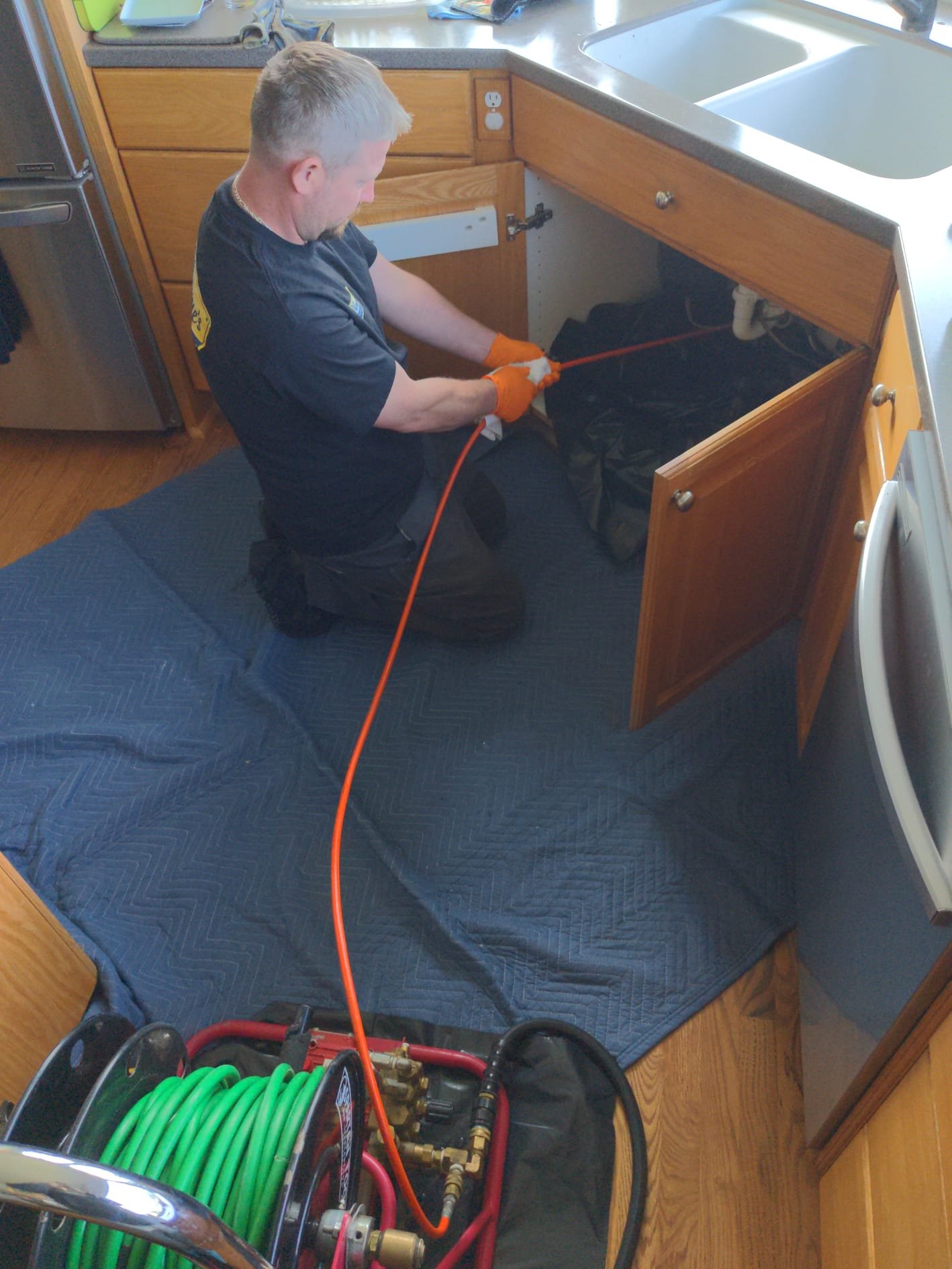
Septic Inspection Services
A septic system is often the most expensive component of a rural property that nobody can see. An inspection makes it visible — to buyers deciding what they're really purchasing, to sellers heading off surprises, and to counties that require the paperwork.
A Real Inspection Follows the Water Through the Whole System
A drive-by glance at a green lawn is not a septic inspection. A real one follows the wastewater's whole journey: the building sewer from the house, the tank's structure and liquid level, the inlet and outlet baffles that protect everything downstream, the pump chamber and floats on pressurized systems, the distribution box that splits flow between drainfield lines, and the drainfield itself — probed and evaluated for saturation, with the system run under real water flow to watch how it behaves rather than how it sits. We also pull the county's as-built records first, because knowing what was installed, when, and where turns an inspection from exploration into verification.
The result is a documented picture of the system's condition and its remaining runway. For buyers around the county's septic territory — from Acme and Concrete out to the farms past Lynden — that picture regularly reshapes a transaction: a failing drainfield is a five-figure discovery you want made before closing, not after. For sellers, a clean recent inspection preempts renegotiation. And for owners in county operation-and-maintenance programs, the same rigor produces the periodic reports your system type requires.
The Judgment Behind the Checklist
Checklists don't inspect systems; inspectors do. The judgment calls are where experience earns its fee: a liquid level an inch above the outlet invert means something different in February's saturated ground than in August; an older gravity system with no as-built on file demands a different investigation than a documented pressure system; effluent surfacing at the field's far end versus its near end points to different failures with very different price tags. Our inspectors have seen enough of the county's systems — every era, every soil type, every deferred-maintenance story — to tell you not just what condition the system is in, but what that condition means for the next ten years.
Gravity, pressure, mound, or sand filter — the inspection standard matches the technology in the ground.
Pumps run, floats tripped, alarms verified — on pressurized systems, the electronics are the system.
Immediate, monitor, and informational — so a $200 baffle doesn't read like a $20,000 drainfield.
Reports formatted for what escrow, lenders, and county health programs actually need to see.
Why LaVergne's?
Wherever the Report Points
An inspection ends with knowledge; these services are what the knowledge is for. Most findings lead somewhere small — and knowing that beats fearing something big.
Septic Tank Pumping
The most common recommendation there is. If levels are high or history is unknown, pumping resets the clock and improves the next look.
Learn More →Septic Repair
Deteriorated baffles, tired pumps, damaged boxes — the modest fixes that inspections exist to catch before they cascade.
Learn More →Septic System Installation
When a system is genuinely at end of life, honest findings become the design brief for its replacement.
Learn More →Sewer Camera Inspection
Add a camera run of the building sewer for the complete house-to-tank picture — the segment surface inspections can't see.
Learn More →Well Pump Repair
Buying rural usually means well and septic both. We evaluate and service the water side too — one visit, both verdicts.
Learn More →Whole House Plumbing
Rounding out due diligence on an older property? The interior plumbing deserves the same honest eye.
Learn More →Closing Date Coming Up Fast?
Septic findings take time to negotiate. Book the inspection early in your contingency window, not the last week.
What Inspections Catch That Walkthroughs Never Will
The expensive septic surprises are precisely the ones invisible from the surface — a system can look immaculate above ground while failing below it. These four discoveries come up again and again in pre-purchase inspections across the county, and every one of them changes what a buyer should pay or a seller should disclose. None of them is findable without opening lids and probing soil.
The Saturated Drainfield
Liquid standing at or above the outlet with soggy soil over the lines — a field at end of life, and the priciest finding on the list.
The Undersized System
A tank and field built for a two-bedroom cabin now serving a four-bedroom remodel. Legal history matters, and so does capacity math.
The Dead Pump Nobody Noticed
On pressure systems, a failed pump or silenced alarm can go unnoticed for months while the tank quietly fills toward backup.
The Phantom System
No as-built, no records, lids lost to time — sometimes what's in the ground isn't what anyone thought, and occasionally it's barely a system at all.
Septic Inspection FAQs
Helpful answers about Septic Inspection from the experienced team at LaVergne's.
Is a septic inspection required when a property sells?
In much of our service area, yes — local health jurisdictions commonly require septic inspection and reporting in connection with property transfer, with specifics varying by county and system type. Lenders and buyers frequently require one regardless. We perform inspections to the applicable local standard and produce the documentation the transaction needs; tell us the property's county and we'll tell you exactly what applies.
Should the tank be pumped as part of the inspection?
Usually, and often it's expected or required for transfer inspections — an empty tank lets the inspector actually see the structure, baffles, and any signs of leakage that liquid hides. There's also a diagnostic bonus: watching whether anything flows back into the empty tank from the outlet side is a revealing drainfield test. We coordinate pumping and inspection as one visit.
How long does an inspection take, and can I attend?
Plan on a couple of hours on site for a typical system, longer if lids need locating and exposing or the system is complex. And yes — attend if you can. Ten minutes looking into your own tank with an inspector explaining what you're seeing teaches more septic ownership than any pamphlet, and buyers especially never regret it.
What's an as-built and why does it matter?
It's the record drawing filed with the county when the system was permitted — showing tank size and location, drainfield layout, and design details. It tells us where to look, what standard the system was built to, and whether what's in the ground matches what was approved. Missing as-builts are common on older systems and aren't fatal; they just mean more investigation, which we build into the visit.
What happens if the inspection finds problems?
Then you've gained leverage and options, which is the entire point. Findings get ranked by urgency and priced, and in a transaction they become negotiation — repairs completed before closing, credits, or price adjustment. The genuinely bad outcome isn't a finding; it's the same failure discovered eight months after closing, when it's entirely yours.
My system is fine — why would I inspect it outside a sale?
Because drainfields fail gradually and expensively, and the early signs show up to an inspector years before they show up in your yard. A periodic look — often paired with routine pumping — catches the cheap fixes (baffles, boxes, floats) while they're cheap, and for the many local systems enrolled in county O&M programs, periodic inspection isn't optional anyway. It's the same logic as dental cleanings, with higher stakes and fewer excuses.