
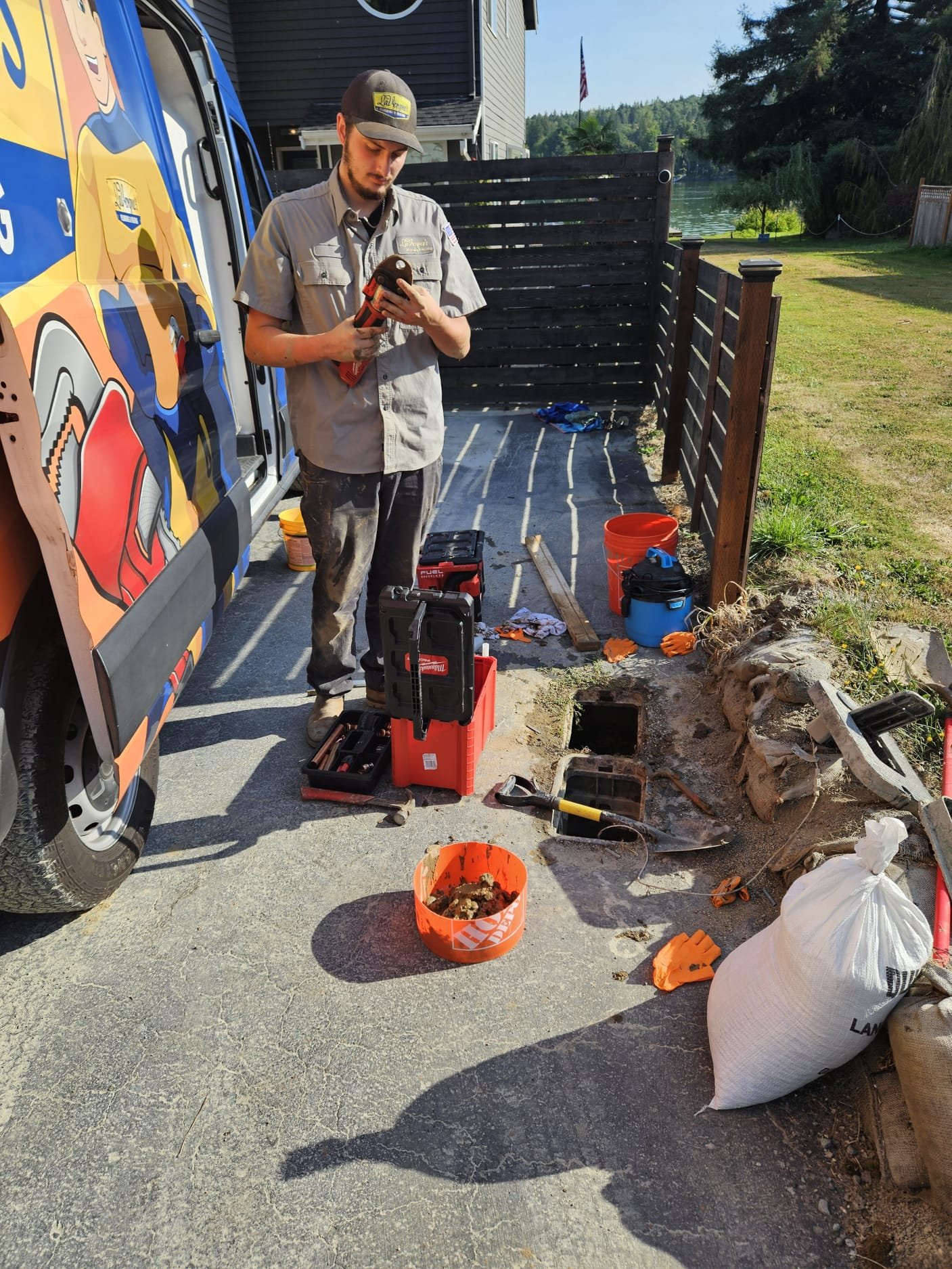
Septic Repair Services
Here's the secret the scare quotes don't tell you: most 'failing septic systems' are one failed part in an otherwise healthy system. A rotted baffle, a tired pump, a tilted distribution box — specific problems with specific fixes, at a fraction of what you feared.
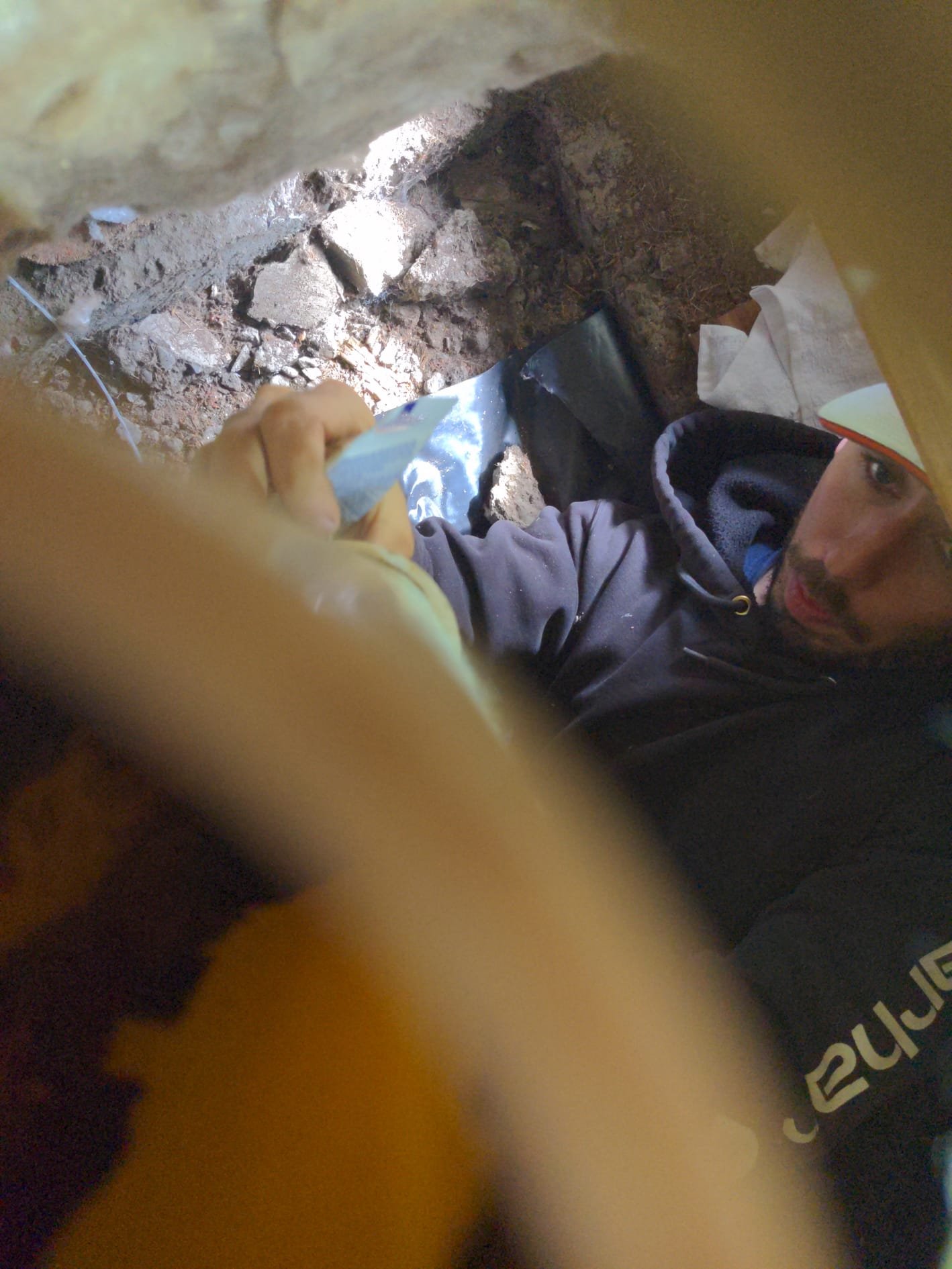
A Septic System Is Parts — and Parts Are Repairable
Walk the water's path and you'll meet every repairable component in turn. The inlet baffle takes decades of flow and eventually rots or breaks off — concrete ones especially — letting turbulence stir the tank. The outlet baffle or tee is the drainfield's last bodyguard; when it fails, scum slips through to clog soil that pumping can't rescue, which makes this humble part arguably the most consequential repair in the whole system. Past the tank, the distribution box settles or tilts, overloading one drainfield line while the others sit dry. On pressure systems, the pump, floats, and alarm form an electrical heart that fails like any appliance. And connecting everything, buried lines get crushed by vehicles, invaded by roots, or separated by settling soil.
Every one of those failures produces symptoms that look, to a worried homeowner, like "the septic is failing." The difference between a component repair and a system replacement is often tens of thousands of dollars — which is why our first job on any septic call in the county is diagnosis with evidence: open it, test it, find the actual failed part, and show you. The number of full replacements we've prevented with a baffle, a float switch, or a re-leveled D-box is the statistic we're proudest of.
Fixing the Cause, Not Just the Casualty
Septic components rarely fail for no reason, and a repair that ignores the reason has a return date. A pump that burned out young was often drowning in solids from an overdue tank. A D-box didn't tilt itself — soil movement or vehicle traffic did, and will again unless addressed. Roots that crushed one line section are still growing next to the repair. So our repairs come with the second question answered: not just what failed, but why — and what, if anything, should change so the new part serves its full term. Sometimes the answer is nothing but better pumping intervals. Either way, you'll know.
The failed component identified and shown to you — photos included — before any repair is priced.
The condition that killed the part gets named and, where practical, corrected in the same visit.
Repairs done to county standards, with permits and notifications handled where the work requires them.
If the system truly is at end of life, we say so with evidence — and never sell a repair that's just a delay.
Why LaVergne's?
Services Around the Repair
Repairs sit in the middle of the septic spectrum — between the maintenance that prevents them and the replacement they help you avoid.
Septic Tank Pumping
The maintenance habit that prevents most repairs on this page — and the first step before several of them.
Learn More →Septic Inspection
Not sure what's wrong — or how much is? A full-system inspection turns vague worry into a ranked findings list.
Learn More →Septic System Installation
When the evidence honestly points to end of life, here's how a new system gets designed and built for your site.
Learn More →Rooter Service
Root-clogged septic lines can often be cut clear and bought years of service before any digging is justified.
Learn More →Sewer Camera Inspection
For buried line problems, the camera pinpoints damage so the repair excavation is one small, correct hole.
Learn More →Emergency Sewer Backup
When a septic failure announces itself through the lowest drain in the house, the emergency line answers first.
Learn More →Been Quoted a Whole New System?
Get a diagnosis-first second opinion. If one component is the real problem, that's all you should pay to fix.
Matching Septic Symptoms to Failed Parts
Septic symptoms are more specific than they feel in the moment — each failure mode has a signature, and reading it correctly is most of the diagnosis. The four patterns below map to the components most often responsible. They're not guarantees (that's what the actual diagnosis is for), but they're the informed starting points that keep repair scoped to reality.
Alarm Sounding or Light On
Pressure-system alarms mean the pump chamber is high — a failed pump, stuck float, or tripped breaker. Silence isn't a fix; the chamber is still filling.
One Soggy Stripe in the Field
A single wet, lush drainfield line while the rest stay dry points at a tilted or clogged distribution box sending everything one direction.
Sewage Surfacing at the Tank
Wet ground or odor right at the tank suggests a structural issue — a failed lid, riser seal, or an inlet/outlet problem — rather than a drainfield verdict.
Backups With a Healthy Tank
Recently pumped but still backing up? The blockage lives in a line — house-to-tank or tank-to-field — not in the tank itself.
Septic Repair FAQs
Helpful answers about Septic Repair from the experienced team at LaVergne's.
My septic alarm is going off — what do I do right now?
Press the silence button if it has one, then cut water use to a minimum — the alarm means the pump chamber is above its working level, and every gallon you send adds to it. Don't just flip the breaker off and ignore it. Most alarms trace to a failed pump, a stuck float, or a tripped circuit, all same-visit repairs; the reserve capacity in the chamber typically buys you a day or so of careful use while we get there.
What exactly is a baffle and why does everyone keep mentioning it?
Baffles (or tees) are fittings at the tank's inlet and outlet that force water to enter and exit from the clear middle zone — below the floating scum, above the settled sludge. The outlet baffle is the only thing preventing grease and solids from flowing straight into your drainfield. When it rots off, the field starts absorbing what it can never release. It's a modest part whose failure causes five-figure damage, which is why every decent pump-out includes looking at it.
Can a clogged or damaged septic line be fixed without replacing the system?
Almost always — the lines are plumbing, not the system's soul. Root intrusion gets cut and cleared; crushed or separated sections get spot-excavated and replaced; bellied runs get regraded. A camera run locates the damage precisely so the repair is one targeted dig. The system replacement conversation only starts when the drainfield soil itself has failed, which is a different diagnosis entirely.
How do I know whether I need a repair or a whole new system?
The dividing line is the drainfield's soil. Components — baffles, pumps, boxes, lines, lids — are all repairable around a healthy field. But soil that's biologically clogged from years of solids carryover can't be repaired, only rested (sometimes) or replaced. The diagnosis is observable: liquid levels, probe tests, and how the field responds to a pumped tank tell the story. We show you the evidence either way, because this is exactly the decision where a homeowner deserves proof.
Do septic repairs require permits?
It depends on the scope, and it's jurisdiction-specific: like-for-like component swaps often proceed simply, while work involving tanks, drainfield modifications, or system alterations typically involves the county health department. We handle the determination and any required permitting as part of the job — done right, the paperwork protects you at resale rather than haunting you.
The previous owner never maintained this system — how worried should I be?
Less than the internet suggests, but enough to act. Start with a pump-out and inspection: the tank's levels and the baffles' condition will tell us quickly how much neglect actually accrued, and the drainfield's response tells the rest. Plenty of neglected systems come through fine once maintenance starts; the ones that don't are better discovered by you on your schedule than by a holiday backup on theirs.