

Sewer Line Replacement
Nobody replaces a sewer line on a hunch — and nobody should be sold one on a hunch either. We diagnose by camera, show you exactly what the line looks like inside, and replace it with the least invasive method your situation allows.
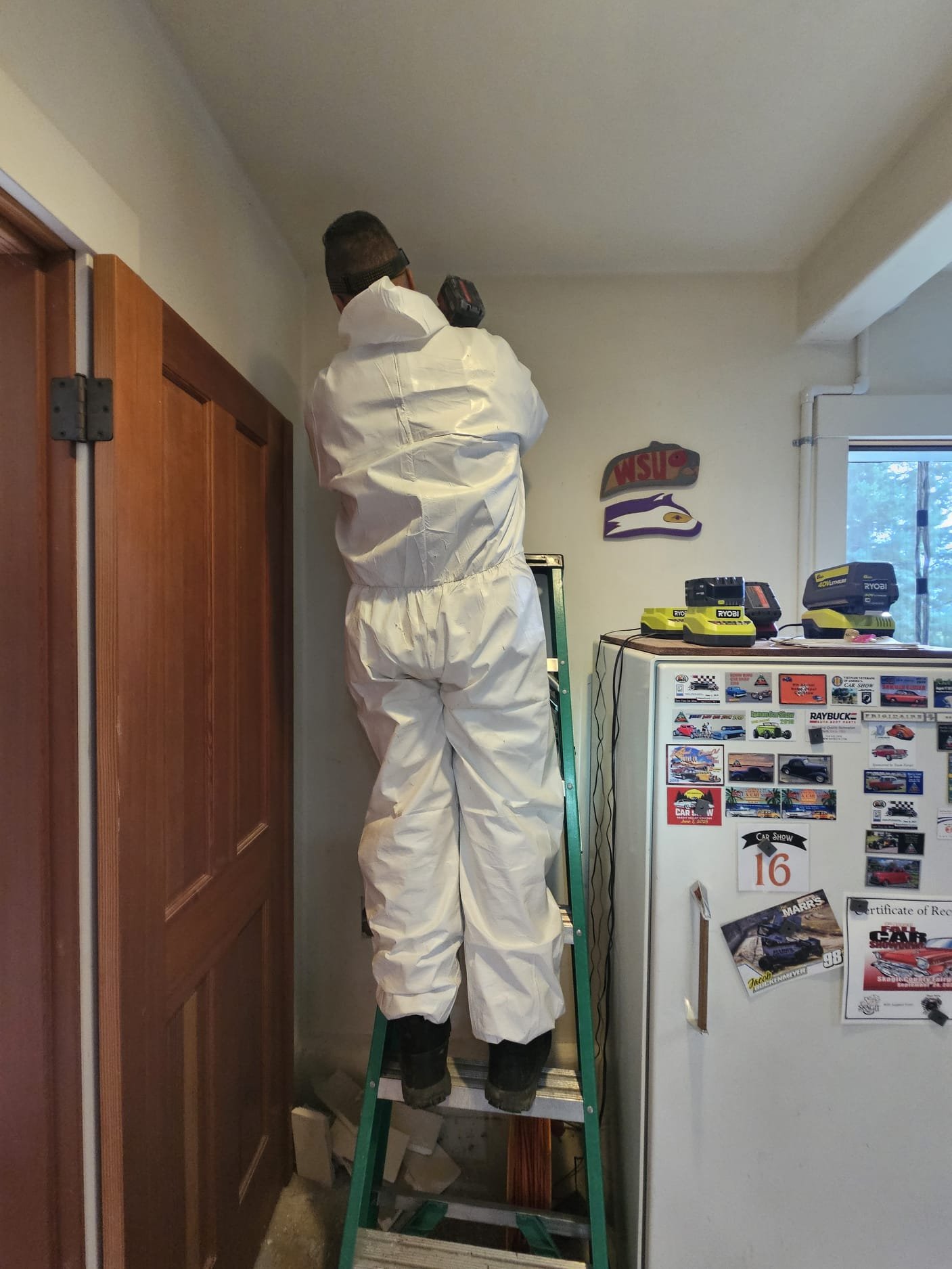
You'll See the Problem Before You Pay for the Solution
Sewer replacement has a trust problem as an industry, because the pipe is buried and the homeowner can't see what they're being told about it. Our answer is simple: the camera goes in first, and you watch the footage with us. Cracked clay tile with roots pouring through the joints, Orangeburg pipe — the tar-impregnated paper material used in mid-century construction — deforming into an oval, a bellied section holding standing water: whatever the condition is, you see it before any replacement conversation begins.
When replacement is genuinely the answer, the method depends on your line's route and failure mode. Pipe bursting pulls a new HDPE line through the old one's path from two access pits, preserving the yard, driveway, and landscaping above. Open-trench replacement — sometimes the better call for badly bellied lines that need re-grading, or collapsed sections a bursting head can't pass — gives complete control of slope and bedding. Homes across Bellingham, Ferndale, and Sedro-Woolley have decades-old laterals reaching end of life, and both methods, done right, produce a line that outlasts your ownership of the house.
Why Sewer Laterals Are Unforgiving Work
A water line just needs to hold pressure. A sewer lateral needs something harder: continuous, correct slope over its entire run, because gravity is the only thing moving waste to the main. Too little fall and solids settle; too much and liquids outrun them — both end in the same clog. Add depth requirements, connection standards at the city main or septic tank, bedding that prevents future bellies, and mandatory inspection, and the gap between a sewer line installed correctly and one merely installed becomes the gap between decades of silence and a repeat of the problem you just paid to solve.
Fall is measured along the entire run, not eyeballed — grade is the whole job in gravity drainage.
Compacted, continuous bedding so the new line never sags into the settling trench beneath it.
Code-standard tie-ins at the city main or septic inlet — the two spots where shortcuts surface years later.
A final camera run through the finished line, recorded, so you hold video proof of what you paid for.
Why LaVergne's?
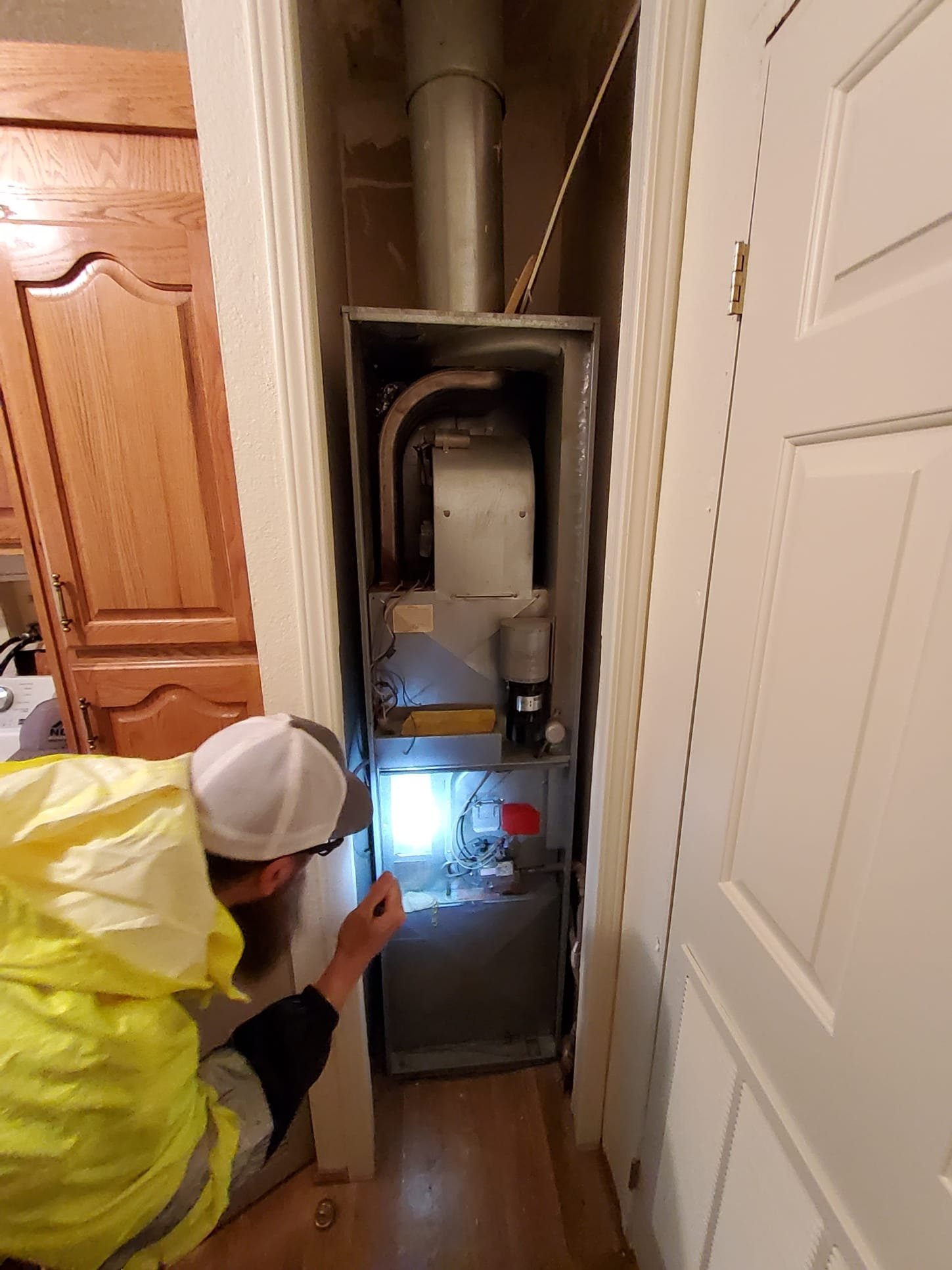
Related Sewer & Drainage Services
Replacement is the last resort on a spectrum. These are the services that surround it — including the ones that might mean you don't need it.
Sewer Camera Inspection
The diagnostic that starts everything. If you've been quoted a replacement elsewhere, an independent camera run is cheap insurance.
Learn More →Sewer Line Repair
One cracked section in an otherwise sound line can often be spot-repaired — a fraction of replacement cost when the footage supports it.
Learn More →Rooter Service
Root intrusion caught early is a maintenance issue, not a replacement trigger. Cutting roots buys sound pipe years of service.
Learn More →Hydrojetting
High-pressure cleaning restores full diameter in greasy or scaled lines — and gives the camera a clear view of the pipe's true condition.
Learn More →Emergency Sewer Backup
Sewage coming up the drains doesn't wait for a scheduled estimate. Our emergency team stabilizes first, diagnoses second.
Learn More →Septic System Installation
Rural properties: if your lateral runs to a failing septic system rather than a city main, the solution may involve both.
Learn More →Been Told You Need a New Sewer Line?
Get a camera-verified second opinion. If replacement is right, we'll show you why on screen — and quote both methods where both apply.
How a Dying Sewer Lateral Behaves
A sewer line at end of life produces a distinctive pattern — different from a simple clog, which is sudden, singular, and solved by clearing. Structural failure recurs, escalates, and shows up in more than one place at once. If your home is displaying the combination below, the camera will almost certainly find one of the usual suspects: root-invaded clay joints, deformed Orangeburg, a bellied run, or a separated coupling.
Backups on a Schedule
Clearing the line works — for a few months. Recurring backups mean the blockage is re-forming at a structural defect.
Multiple Slow Drains at Once
One slow drain is a fixture problem. Every low fixture gurgling and draining slowly points at the lateral they all share.
Sewage Odor in the Yard
A persistent smell — often with a lush green stripe or soggy depression along the line's path — means waste is escaping into the soil.
Sunken Trench Line
Ground settling in a visible line across the lawn traces a deteriorating pipe or washed-out bedding beneath.
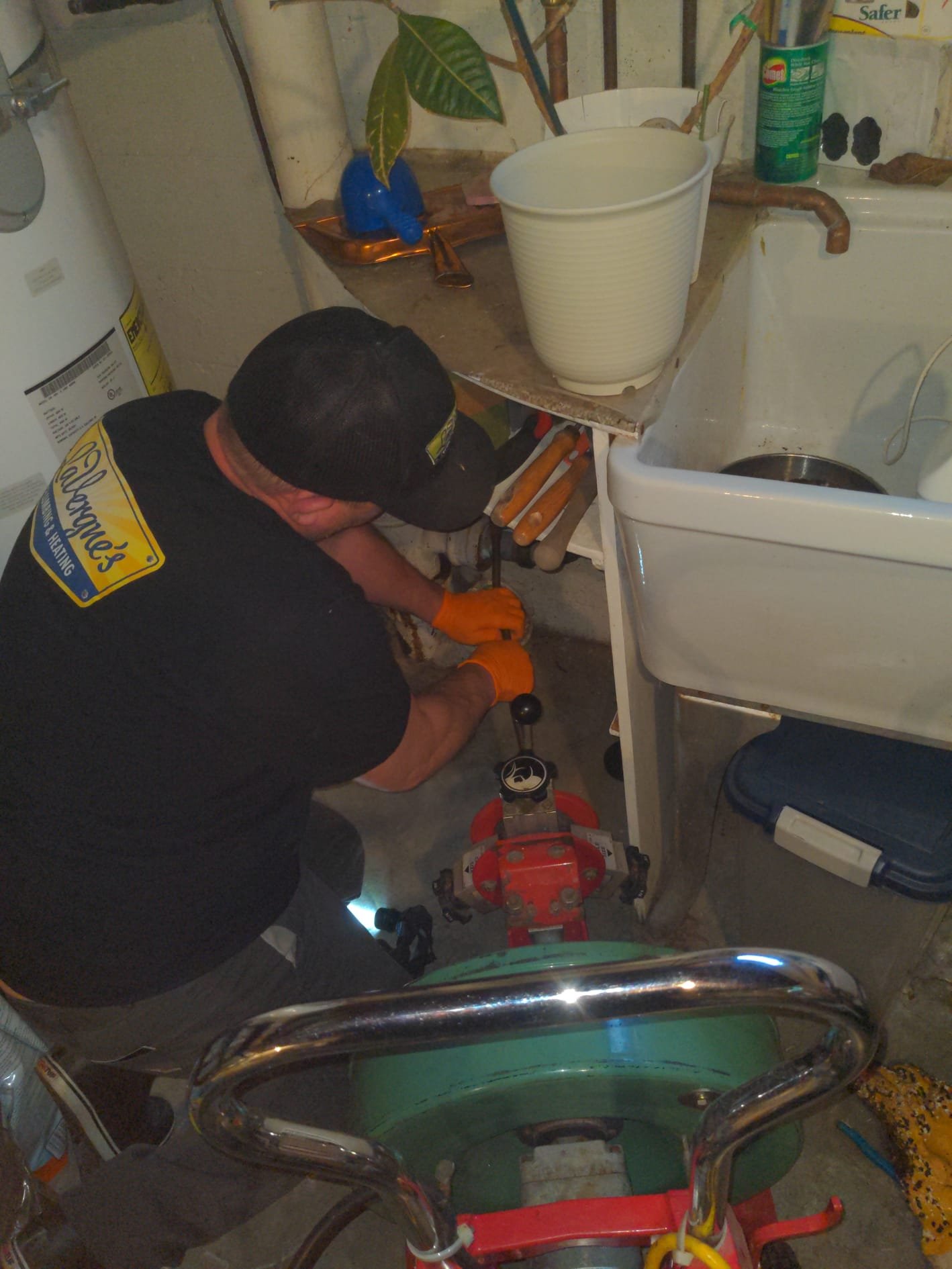
Sewer Line Replacement FAQs
Helpful answers about Sewer Line Replacement from the experienced team at LaVergne's.
Trenchless or open trench — how do you decide?
The camera footage decides. Pipe bursting needs a route the bursting head can travel, so a fully collapsed section rules it out, and a badly bellied line often needs open-trench work because the fix is re-establishing grade — something bursting can't do, since the new pipe follows the old path. Where both methods are viable, we quote both and let you weigh cost against yard impact.
What is Orangeburg pipe, and do I have it?
Orangeburg is bituminized fiber pipe — layers of wood pulp and tar — used widely in post-war construction when metal was scarce. It deforms under soil load, blistering inward and flattening into an oval before collapsing outright, and most of it is now decades past its intended life. Homes of that era anywhere in the county may have it; a camera inspection identifies it immediately by its distinctive deformation pattern.
Whose responsibility is the lateral — mine or the city's?
In most local jurisdictions, the homeowner owns the lateral from the house to the connection at the public main, including the portion under the street or right-of-way in many cases. Rules vary by city, and it genuinely matters to the scope of a replacement, so verifying your jurisdiction's policy is one of the first things we do when quoting.
How disruptive is pipe bursting to my yard?
Two access pits — typically one near the house's cleanout or foundation and one at the property line or main connection — and everything between them stays intact. Lawns, mature shrubs, fences, walkways, and driveways over the run are undisturbed, which is precisely the scenario trenchless methods were developed for.
Can I keep using water during the replacement?
Water supply stays on, but anything that drains — sinks, showers, toilets, laundry — needs to pause while the lateral is disconnected. For most single-day replacements that's a matter of hours, and we'll give you the realistic window before work starts so your household can plan around it.
Does a new sewer line come with an inspection?
Yes — sewer lateral replacement is permitted work, inspected before backfill to verify slope, bedding, materials, and connections. On top of the county's inspection, we run our own camera through the completed line and give you the recording. Between the closed permit and the footage, you have documentation that follows the house at resale.