

Septic System Installation
A septic system is a wastewater treatment plant scaled to one household — and like any treatment plant, it's designed before it's built. Your soil, your slope, your water table, and your home's size all get a vote before the first bucket of dirt moves.
Your Soil Chooses the System — We Just Build It Well
Every septic design conversation in this county starts underground. The drainfield's job is to let soil finish treating what the tank started, and soil varies wildly here — free-draining glacial outwash in one valley, heavy clay the next parcel over, seasonal high groundwater near the sloughs and floodplains. The site evaluation (soil logs, percolation characteristics, water table depth, setbacks from wells and surface water) determines which technology your property can support: a classic gravity system where soils are deep and forgiving; a pressure-distribution system where effluent needs even, dosed spreading; or a mound or sand-filter system where shallow soils or high water demand the treatment be built up rather than dug down.
From there it becomes an engineering and construction project with the county health department as a partner at every gate: design approval, installation inspection, final as-built documentation. We manage that whole arc — for new homes going up outside Everson or in the Chuckanut foothills, and for replacement systems where a half-century-old original has genuinely finished its service. The goal is a system so thoroughly suited to its ground that the next conversation about it is a routine pump-out, years from now.
Where Septic Installations Are Won and Lost
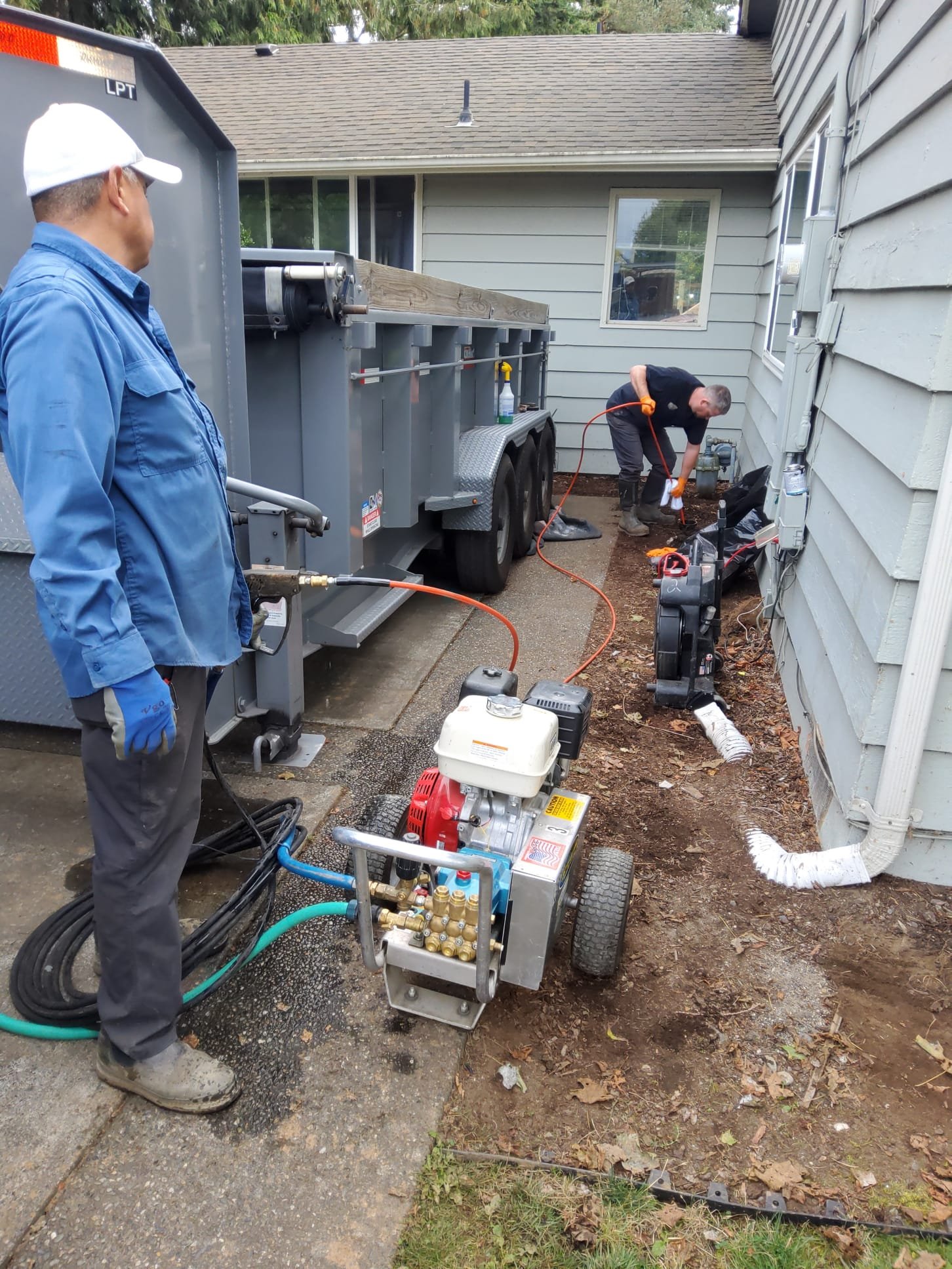
Two systems built from the same approved design can age completely differently, and the difference is construction discipline. Drainfield trenches excavated in wet weather can smear and compact the very soil surfaces the system depends on — scheduling and technique matter. Laser-set grades on gravity lines decide whether effluent distributes or pools. Tank bedding determines whether the heaviest component settles level or cracks a connection in year three. And protecting the drainfield area from every machine except the ones building it preserves the soil structure that no amount of money can restore once crushed. These aren't extras; they're the difference between installing a system and installing its lifespan.
Trenching timed and executed to avoid smearing and compaction — the invisible installation killer.
Distribution lines and boxes set to exact design elevations, because inches decide even loading.
Set level on proper bedding, connections watertight, risers brought to grade for a lifetime of easy service.
County inspections passed at each stage, and the final as-built filed — the paperwork that protects resale.
Why LaVergne's?
Services That Travel With a New System
Septic installation rarely happens in isolation — it's usually part of building, buying, or renewing a rural property. Here's the surrounding work we handle.
Well Pump Installation
Building rural means water in and water out. We design both systems with the required separations from day one.
Learn More →Septic Inspection
Not sure your existing system is truly done? An inspection with evidence comes before any replacement conversation with us.
Learn More →Septic Repair
Component-level fixes that extend serviceable systems — because the best installation is sometimes the one you don't need yet.
Learn More →Septic Tank Pumping
Your new system's maintenance plan starts on day one. We set the interval and keep the records your county expects.
Learn More →Main Water Line Replacement
Trenching equipment already on site makes it the economical moment to renew an aging water service line too.
Learn More →Financing & Pay Options
A septic system is real money. Financing options keep the right system — not the cheapest corner-cut — within reach.
Learn More →Building, Buying, or Replacing?
Start with the site evaluation — everything else in a septic project flows from what your soil can do.
What Shapes a Septic Installation's Scope and Cost
Septic quotes vary enormously between properties, and homeowners deserve to know why before the bids arrive. The cost drivers are physical realities of your site, not sales strategy — and understanding these four lets you read any bid (ours included) with informed eyes, and spot the too-cheap quote that's quietly ignoring one of them.
What the Soil Allows
Free-draining soils permit simple gravity systems; clay or high groundwater push toward pressure, sand filter, or mound designs at higher cost.
Bedroom Count Sets Size
Design capacity follows the home's bedrooms, not its current occupants — a four-bedroom house needs a four-bedroom system, period.
Setbacks Shrink the Canvas
Required distances from wells, streams, property lines, and buildings can turn a big parcel into a small buildable envelope.
Reserve Area Requirements
Most designs must set aside untouched ground for a future replacement field — land that shapes today's layout even though nothing is built on it.
Septic System Installation FAQs
Helpful answers about Septic System Installation from the experienced team at LaVergne's.
How long does the whole process take, start to finish?
Construction itself is typically measured in days — often a week or less for a conventional system. The calendar is mostly consumed earlier: site evaluation, design, and health department review, which together commonly run weeks to a few months depending on county workload and site complexity. If you're building a home or facing a failing system, starting the septic process early is the single best schedule protection there is.
What's the difference between gravity, pressure, and mound systems?
Gravity systems let effluent flow downhill through the tank to trenches — simple, robust, and possible only where soils are deep and accepting. Pressure distribution adds a pump that doses effluent evenly across the field, used where soils need measured loading. Mound and sand-filter systems build a treatment layer above native ground where soils are shallow or groundwater is high. Cost and complexity rise in that order — and your site evaluation, not preference, determines which you're building.
Can the new drainfield go where the old one is?
Generally no — soil that's spent decades receiving effluent is biologically clogged and can't simply host a new field. This is exactly why designs include a designated reserve area. Replacement systems typically build on that reserve or other approved ground, and in tight-site cases, alternative technologies can shrink the footprint needed. It's a solvable problem, but it's why protecting your reserve area from structures and traffic matters for decades in advance.
Will the installation destroy my yard?
It will disturb it honestly — this is excavation — but good crews control the footprint. Equipment routes are planned, topsoil is stripped and stockpiled separately for restoration, and the finished grade is left ready for reseeding. The area over a new drainfield wants grass and only grass afterward: no vehicles, no structures, no thirsty trees. We'll walk the whole recovery plan before the first machine arrives.
What can I do to make the new system last as long as possible?
Three habits cover most of it: pump on schedule (we'll set your interval and remind you), keep non-biodegradables and heavy grease out of the drains, and treat the drainfield as sacred ground — no parking, no building, no livestock concentration over it. Systems that get those three things routinely serve for decades; nearly every premature failure we see broke at least one of them.
Do you handle the health department process, or do I?
We do — it's half the job. Site evaluation coordination, design submission, permit applications, scheduling the county's installation inspections, and filing the final as-built all run through us, with you informed at each gate rather than managing them. The inspections aren't adversarial; they're verification that you got what was designed, and our systems are built to pass them the first time.