
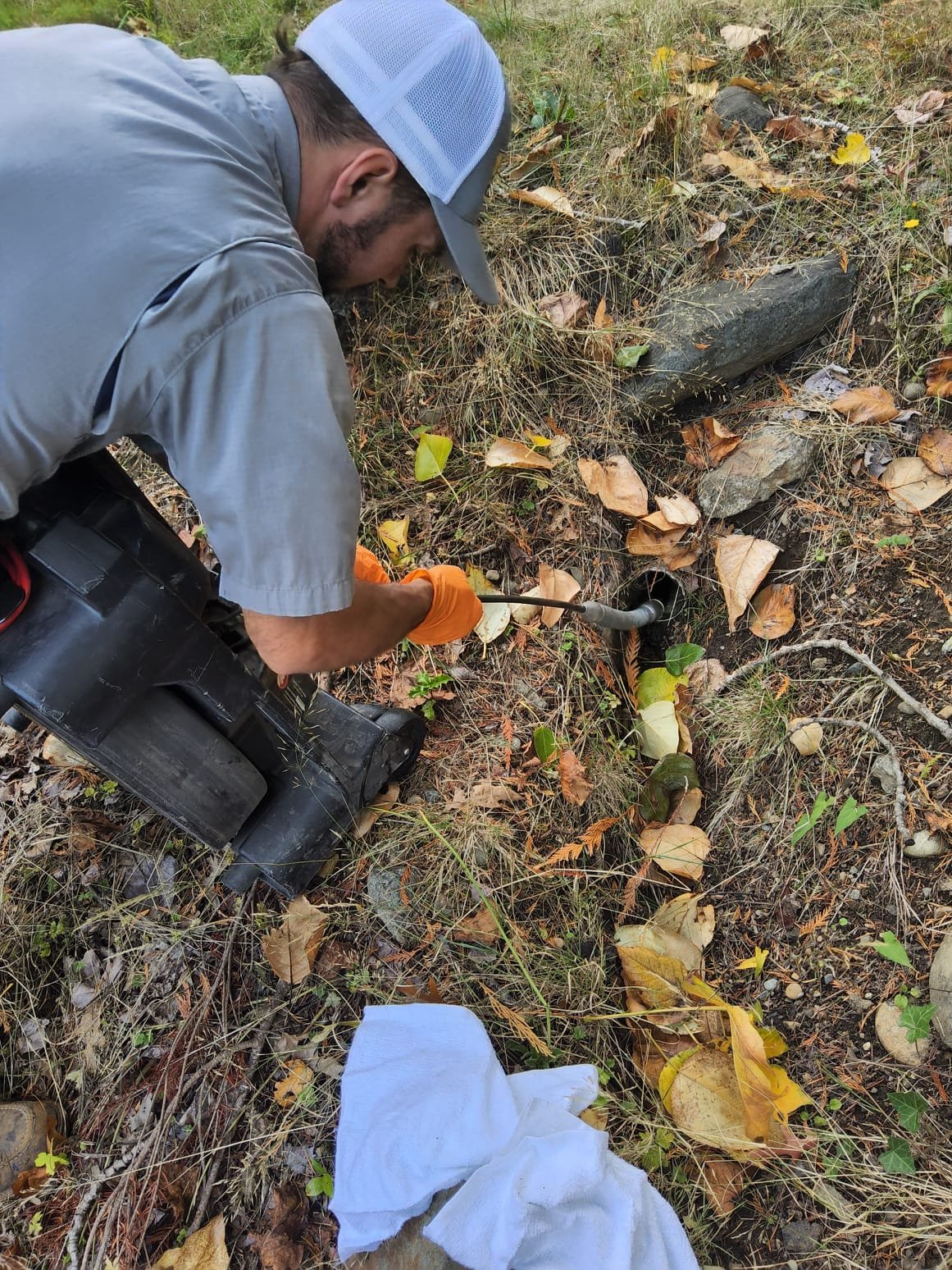
Emergency Sewer Backup Service
Sewage rising in a tub or floor drain means the main line is blocked and everything you send down is coming back. First move: stop all water use — every flush, every faucet, the dishwasher mid-cycle. Second move: call us. We answer around the clock.
What to Do — and Not Do — While Help Is Coming
The physics of a backup is simple and useful to know: your home's drains all merge into one main line, and when that line blocks, wastewater from every source obeys gravity to the lowest opening — usually a basement floor drain, a ground-floor tub, or the lowest toilet. Which means the single most protective thing you can do costs nothing: stop putting water in. Every flush upstairs arrives at that floor drain downstairs. Pause laundry mid-cycle, skip the sink, and the backup largely stops advancing while we're en route.
Then protect people before property. Sewage is biologically contaminated — keep kids and pets away from affected areas, don't wade through standing water where it might contact outlets or appliances, and ventilate the space if you can do so safely. Move what's movable from the water's path, photograph the scene for insurance before cleanup begins, and leave the affected drains alone: chemical drain cleaners do nothing against a main-line blockage except add caustics to water someone must later work in. When our crew arrives, the sequence is relief first — machine-clearing the blockage to get your drains functioning — then diagnosis, because a backup is a symptom and the cause determines whether tonight was a one-off or a warning.
What Separates Backup Response From Backup Chaos
A backup at midnight tests a plumbing company's whole operating model at once: does the phone reach a human, does the truck carry main-line equipment or just hand tools, does the tech clear to full flow or to barely-draining, and does anyone explain what actually happened? The difference shows in the follow-through — a cleared line tested under real volume, a straight answer about what came back on the cable, honest guidance on whether the situation needs a camera, a cleanup referral, or nothing further, and documentation that supports an insurance conversation if the damage warrants one. Emergencies deserve craft, not just speed.
Trucks carry full-size machines and heads — a backup is never a hand-auger problem.
Tested under volume before we leave — "draining slowly again" is not a finish line.
What the cable retrieved, photographed and explained — your line's testimony about its own condition.
One-off clog, developing pattern, or structural warning — you'll know which, and what each costs to address.
Why LaVergne's?
From Tonight's Relief to a Permanent Answer
Clearing the backup is chapter one. These services write the rest of the story — from diagnosis to the fix that means never meeting us at 2 a.m. again.
Sewer Camera Inspection
The morning-after move: see exactly what caused the backup and whether it's waiting to repeat.
Learn More →Rooter Service
If roots came back on the cable, scheduled clearing turns emergency intervals into maintenance appointments.
Learn More →Hydrojetting
Grease-caused backups get the full-scour treatment that cable clearing can't match.
Learn More →Sewer Line Repair
When the cause is a broken or offset section, targeted repair closes the case at that exact spot.
Learn More →Septic Repair
On septic homes, a backup often implicates the tank or its components — same emergency number, different diagnosis.
Learn More →Emergency Plumbing
Backups, bursts, gas odors, no water — every urgent failure routes through one line that always answers.
Learn More →Sewage Rising Right Now?
Stop all water use and call 360-685-8098. A live person answers, and a main-line-equipped truck rolls — day, night, or holiday.
The Four Causes Behind Almost Every Backup
What comes back on the clearing cable — and how the line behaved before tonight — usually identifies the culprit from a short list. Knowing which one you had matters more than it seems, because each cause carries a different forecast: one is genuinely a fluke, one is a habit, and two are the line itself asking for attention. We'll tell you which story your backup told.
The Flushed Fluke
Wipes, hygiene products, a toy — a one-time obstruction in a healthy line. Cleared, lesson noted, forecast excellent.
The Grease Habit
Years of kitchen grease cooling into pipe-wall wax until the bore closes. Clears today; recurs unless the habit — or the buildup — is addressed.
The Root Net
A living mass harvesting everything you flush. Manageable on a schedule in sound pipe; a replacement conversation in shattered pipe.
The Failing Line
Collapsed clay, deformed Orangeburg, or a belly holding solids — backups arriving more often, from a pipe finishing its career.
Emergency Sewer Backup FAQs
Helpful answers about Emergency Sewer Backup from the experienced team at LaVergne's.
Why did the backup come up in the tub and not the toilet?
Gravity picks the exit. With the main line blocked, wastewater rises through whichever opening sits lowest in the system — and tub and shower drains sit lower than toilet rims, with basement floor drains lowest of all. It's also why the fix is never at the fixture where sewage appeared: that drain is just the messenger for a blockage downstream of everything.
Is the sewage in my home actually dangerous?
Treat it as contaminated, because it is — raw wastewater carries bacteria and pathogens that don't belong on skin, and especially not near children, pets, or anyone immune-compromised. Keep people out of affected areas, wash thoroughly after any contact, and take porous materials that soaked (carpet pad, cardboard, fabric) seriously in cleanup decisions. Significant contamination is worth professional remediation, and we'll tell you honestly when yours crosses that line.
Does homeowner's insurance cover sewer backups?
Often only if you've added the specific endorsement — standard policies commonly exclude backup damage unless "water backup" or "sewer backup" coverage was purchased as a rider, typically for a modest premium. It's among the most valuable cheap coverages a homeowner can carry, and tonight is a hard way to learn it exists. Either way, photograph everything before cleanup and keep our service documentation for the claim file.
Could the blockage be in the city's main rather than my line?
Possible, and worth knowing the tell: if neighbors are backing up too, or sewage is surfacing at street manholes, the public main may be the problem — that's a call to your city or sewer district, which responds to its own infrastructure. A backup affecting only your home almost always sits in your lateral. When it's ambiguous, our diagnosis establishes which side of the property line the trouble lives on, which determines who pays for what.
I'm on septic — is a backup different for me?
Same symptom, wider suspect list. Beyond a blocked line, septic backups can mean a tank overdue for pumping, a failed outlet component, a dead pump in a pressurized system, or a drainfield refusing water. The emergency response starts the same — stop water use, call — and our crews carry both the clearing equipment and the septic diagnostic experience, so the cause gets named correctly the first night.
How do I make sure this never happens again?
Match the prevention to tonight's cause. Fluke obstruction: mind what's flushable and you're done. Grease line: a jetting reset plus kitchen habits. Roots: scheduled clearing intervals or joint repairs where the camera shows entry. Failing pipe: the repair-or-replace conversation, on your timeline instead of the line's. There's also one universal upgrade — a backwater valve, which physically blocks reverse flow from ever reaching your drains, worth discussing for any home that's now had its second event.