
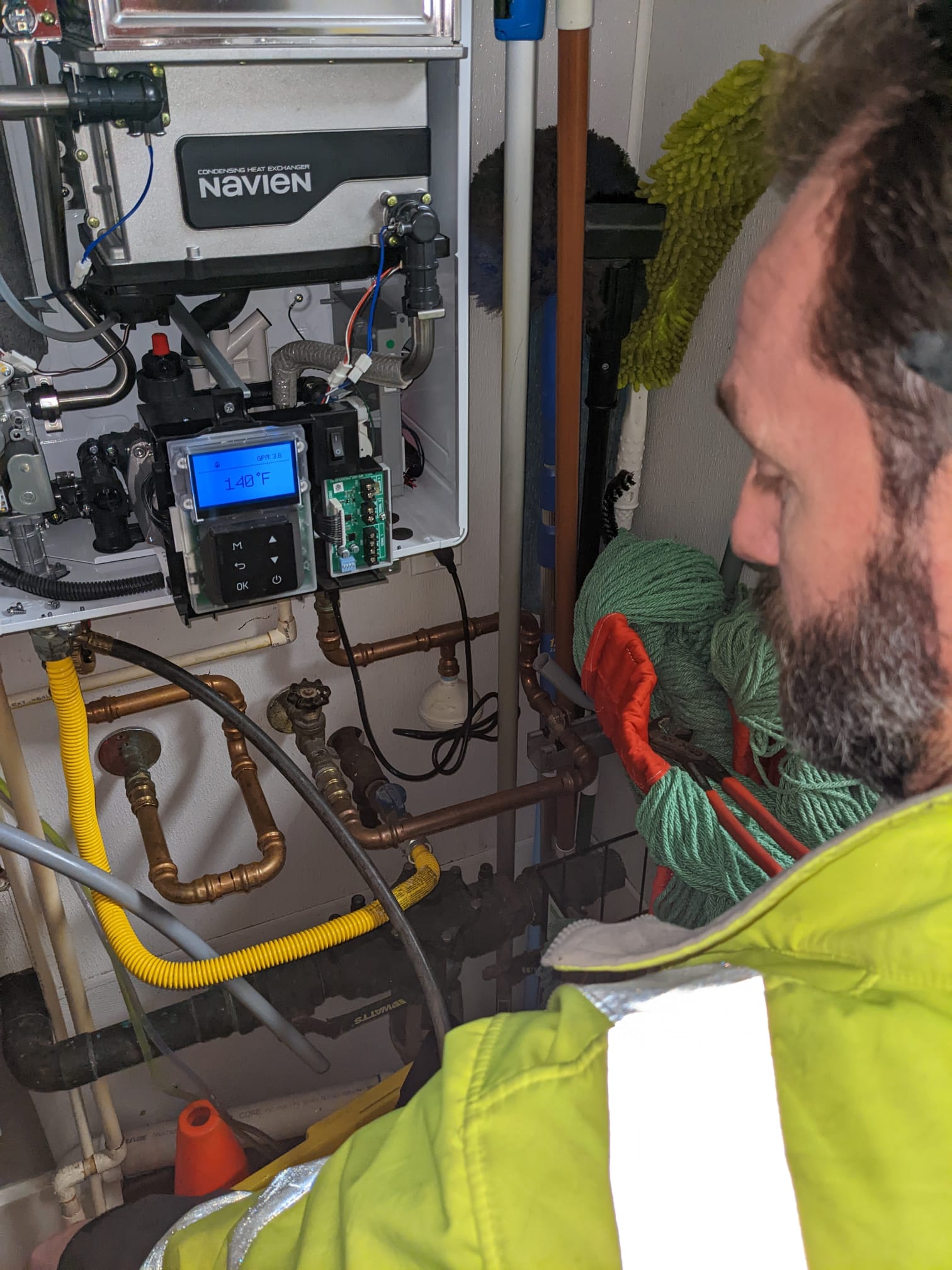
Gas Leak Detection & Repair
If you smell gas right now: leave the building, don't flip switches or light anything on the way out, and call from outside — your gas utility's emergency line for a strong odor, or us at 360-685-8098. Everything on this page can wait until you're standing in fresh air.
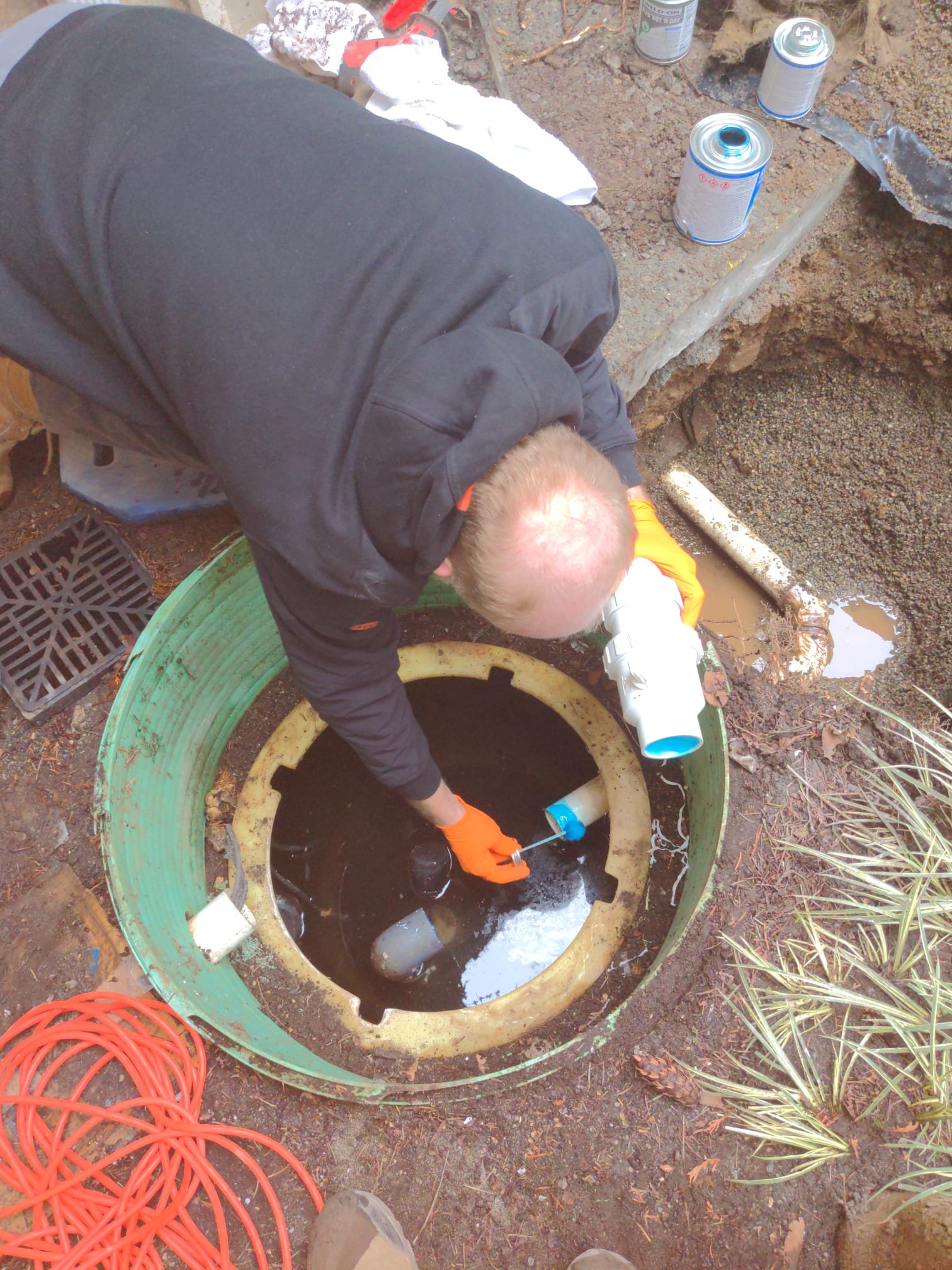
What That Smell Is, and How Seriously to Take It
Natural gas and propane are odorless from the ground; the rotten-egg smell is mercaptan, an additive whose only job is to be unmissable. Respect it accordingly. A faint whiff near an appliance that comes and goes deserves a prompt professional visit with windows opened meanwhile. A strong or spreading odor deserves the full protocol: everyone out, no switches, no flames, no phones until outside, then the calls. There is no version of gas-leak troubleshooting worth doing yourself from inside the house — the professionals' entire advantage is instruments that find what noses only suspect.
Those instruments are the detection half of our work: electronic combustible-gas detectors sensitive to traces far below what you can smell, swept along every joint, fitting, valve, and appliance connection; pressure testing that proves whether the system holds; and bubble-solution verification at suspect fittings. Leaks hide in predictable places — aging fittings, flexible appliance connectors past their era, valves loosened by decades of thermal cycling, and buried lines to outbuildings and propane tanks on rural properties. Finding all of them, not just the loudest one, is the standard, because a system that had one neglected fitting frequently has two.
Gas Work Is Where Credentials Stop Being Paperwork
Plenty of home trades tolerate an ambitious amateur; gas fitting is not one of them. The material choices, joint compounds, testing procedures, and appliance connection standards exist because their failure mode isn't a puddle — and Washington regulates the work accordingly. Licensed gas fitters carry the training to repair to code, the instruments to prove tightness rather than assume it, and the judgment to spot the second problem near the first: the corroded connector two feet from the leaking valve, the amateur splice from a previous owner's weekend. When the repair is done, you get a system verified tight under pressure, not a fitting that merely stopped smelling.
The affected line is shut and vented before repair begins — sequence is safety in this trade.
Approved pipe, fittings, and joint compounds — never the hardware-store improvisation that caused half these calls.
Once instruments are out, every accessible connection gets checked — one visit, whole-system confidence.
Pilots and appliances restored to proper operation and combustion checked before we leave.
Why LaVergne's?
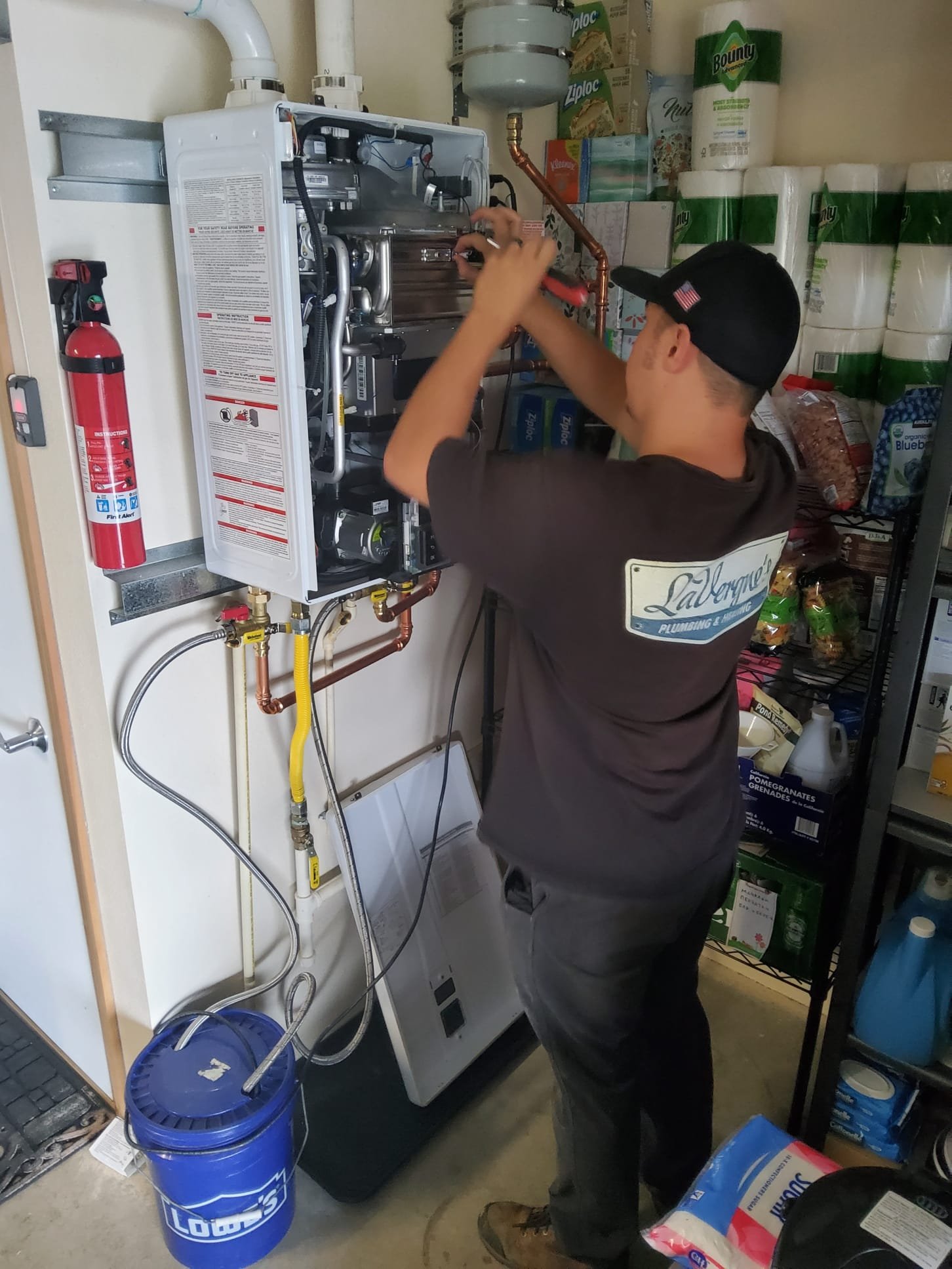
Beyond the Leak
Leak calls often reveal gas systems due for more than a patch — and gas-burning equipment that deserves the same certified hands.
Gas Line Installation
New runs for ranges, dryers, fireplaces, generators, and grills — sized, permitted, and tested by the same licensed fitters.
Learn More →Gasfitting Services
The full gas trade: appliance connections, valve replacements, system modifications, and code corrections.
Learn More →Tankless Water Heater Repair
Gas-fired tankless units with ignition or supply issues get diagnosis that covers both the appliance and its fuel line.
Learn More →Furnace Repair
Gas furnace acting odd after a leak scare? Combustion-side inspection and repair from the heating side of our house.
Learn More →Leak Detection
Water leaks hide with the same cunning as gas ones. The same locate-first philosophy, different instruments.
Learn More →Emergency Plumbing
Gas odors, burst pipes, backups — the emergency line triages them all, around the clock.
Learn More →Faint Gas Smell That Comes and Goes?
Intermittent odors are still findings waiting to happen. Get the system swept with instruments — and sleep on a verified answer.
Gas Leak Signs That Aren't the Smell
Mercaptan is the headline warning, but leaks betray themselves other ways too — useful to know because odor fade is real (noses acclimate to faint persistent smells) and because buried leaks outdoors may never reach your nose at all. Any of the four below, with or without odor, justifies a detection visit; combined with odor, they justify the full leave-and-call protocol.
Hissing Near Gas Equipment
A faint hiss at a meter, valve, or appliance connection is gas escaping under pressure — audible leaks are rarely small ones.
Dead Vegetation in a Line's Path
A stripe of yellowed grass or dying shrubs over a buried gas run — while everything around it thrives — is a classic underground leak signature.
Unexplained Usage Increase
A gas bill climbing with no change in weather or habits can mean fuel escaping somewhere between the meter and your burners.
Pilots & Burners Misbehaving
Pilots that keep dying, lazy yellow flames where blue should be, or soot at an appliance point to supply or combustion trouble worth a certified eye.
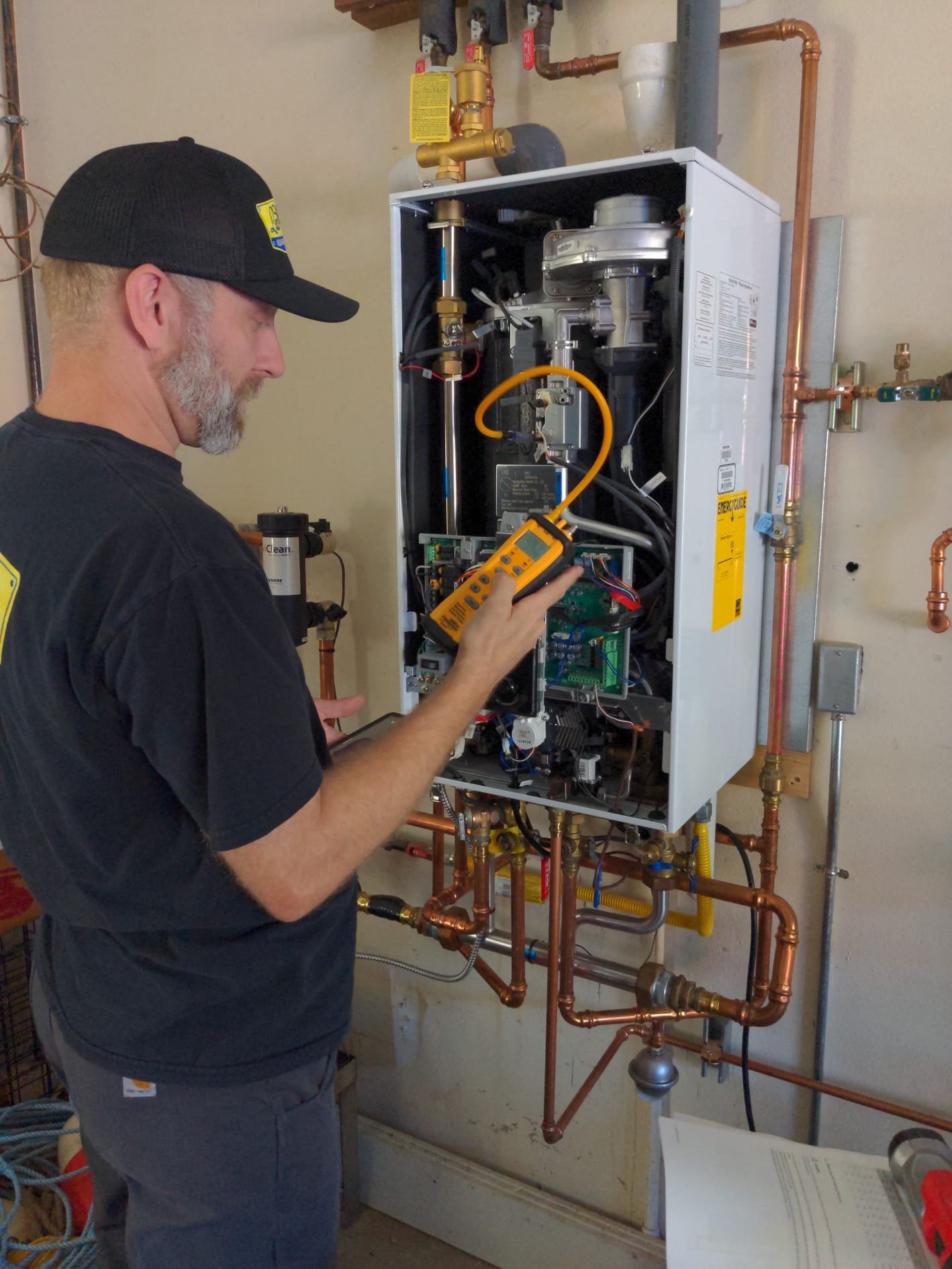
Gas Leak Detection & Repair FAQs
Helpful answers about Gas Leak Detection & Repair from the experienced team at LaVergne's.
I smell gas right now — walk me through it again?
Leave the building immediately, taking everyone with you. On the way out: no light switches in either direction, no flames, no unplugging things, no phone calls until you're outside and away. Then call — your gas utility's emergency number for a strong odor (they respond around the clock and can shut supply at the meter), and us for detection and repair. Don't re-enter until it's been declared safe. Ten cautious minutes is the whole cost of doing this right.
Who do I call — the gas company or you?
Both have roles. The utility handles the emergency response and everything up to the meter — and shutting off supply. Everything past the meter — house piping, appliance connections, buried runs to shops and generators — is the property owner's system, which is where licensed gas fitters come in. Typical sequence for a strong odor: utility first for safety, us second for the actual find-and-fix on your side of the meter.
Can you check my system even if I'm not sure there's a leak?
Absolutely — precautionary sweeps are some of the most worthwhile visits we run. Buying an older home, smelling something faint and intermittent, or just never having had decades-old gas piping inspected are all good reasons. The instruments answer the question definitively either way, and "verified tight" is a genuinely pleasant thing to know about your house.
Do you handle propane systems too?
Yes — LP systems are everywhere in our rural service area, and they add their own considerations: propane is heavier than air, so it pools low in crawlspaces and basements instead of rising, which changes both the danger profile and the detection approach. Tank connections, regulators, and buried lines from tank to house are all within our licensed scope.
What actually causes leaks in home gas systems?
Age and vibration, mostly. Threaded joints work microscopically loose over decades of thermal cycling; old-style flexible appliance connectors predate modern standards and crack; valves wear; buried steel corrodes; and DIY appliance hookups contribute more than their share. It's why our repairs include a whole-system sweep — the conditions that aged one fitting aged its neighbors on the same schedule.
Should I have gas detectors in my home?
Worth considering, especially with gas appliances in enclosed spaces or bedrooms nearby — and unambiguously yes for carbon monoxide detectors, which guard against the combustion byproduct no additive makes smellable. Placement matters (natural gas rises, propane sinks, CO mixes), so mention it during any visit and we'll point you at sensible spots for your specific home and fuel.