
Heat Pump Installation
The Pacific Northwest is arguably the best heat pump climate in America — mild enough that the technology thrives, warm enough in recent summers that the cooling half finally matters. A properly sized installation delivers both, on one system, at efficiency a furnace can't touch.
Our Climate Was Built for This Technology
A heat pump doesn't create heat — it moves it, pulling warmth out of outdoor air and delivering it inside at two to four times the efficiency of generating that heat directly. The catch has always been cold weather: the colder the air, the harder the extraction. Which is exactly why Western Washington is the sweet spot. Our winters spend most of their time between 35 and 50 degrees — conditions where even standard heat pumps excel — and modern cold-climate models hold strong output well below freezing, covering the handful of genuinely cold snaps each year. Meanwhile, summers here have changed: the region that never needed air conditioning now sees heat waves that make the cooling half of a heat pump feel less like a bonus and more like insurance.
The installation itself is where efficiency is won or lost. We start with a load calculation — a room-by-room measurement of what your specific home actually needs, based on its insulation, windows, and orientation — rather than the "square footage divided by a number" shortcut that produces the oversized, short-cycling systems this industry is unfortunately known for. From there: equipment selection matched to the load, placement engineered for airflow and sound, line sets and electrical run to spec, and commissioning with measured verification. Homes across Bellingham, Lynden, and Anacortes have been electrifying their heating with us, and the incentive landscape has never made the math friendlier.
The Install Determines More Than the Equipment Does
Industry studies have found a large share of heat pumps operating well below rated efficiency — not because the equipment is bad, but because of installation shortcuts: oversizing, incorrect refrigerant charge, leaky or undersized ductwork, and skipped commissioning. Two identical units can perform a full efficiency class apart depending on who installed them. When you're comparing quotes, the questions that reveal quality aren't about brand — they're about whether a load calculation was performed, how charge will be verified, what happens with your existing ducts, and whether commissioning data will be documented and handed to you.
Every quote built on measured heat loss and gain — the document that justifies the size we recommend.
Existing ducts evaluated for leakage and capacity; a great unit on bad ducts is a bad system.
Refrigerant set per line-set length and confirmed by measurement — the top field cause of lost efficiency.
Federal tax credit documentation and utility rebate requirements built into the process, not left to you.
Why LaVergne's?
Installations That Pair With a Heat Pump
Once a home starts electrifying, several upgrades compound each other. These pair most naturally with a new heat pump.
Ductless Mini-Split Installation
No ducts, or rooms the ducts never reached? Ductless heads deliver the same technology zone by zone.
Learn More →Heat Pump Water Heater Installation
Apply the same efficiency physics to your hot water — often the second-best incentive-backed upgrade in the house.
Learn More →Heat Pump Replacement
Upgrading from an older heat pump rather than a furnace? The replacement process has its own considerations.
Learn More →Thermostat Services
Heat pumps want thermostats configured for their behavior — staging, lockouts, and schedules set correctly from day one.
Learn More →Furnace Services
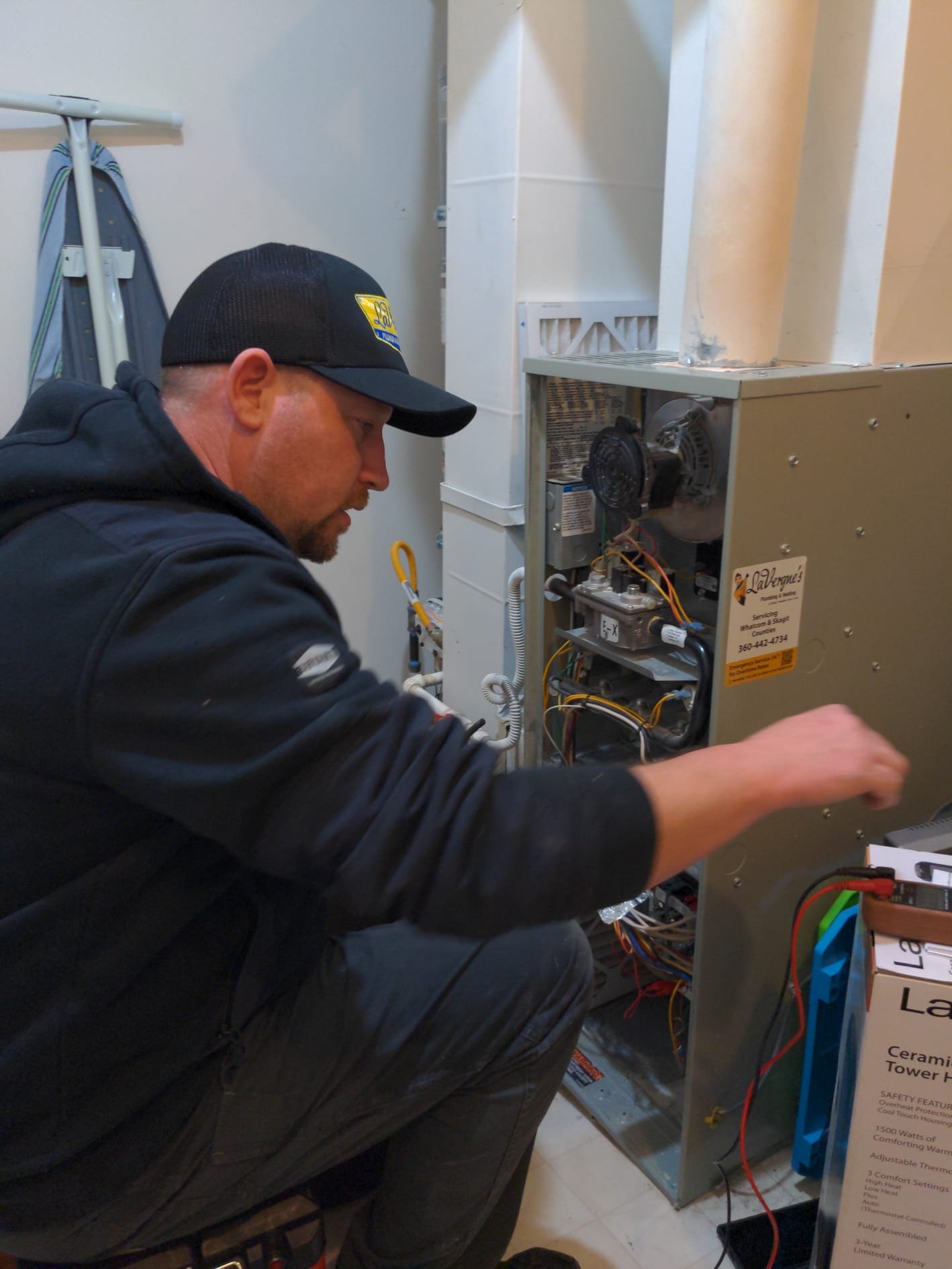
Dual-fuel setups pair a heat pump with your gas furnace — the pump handles mild days, the furnace takes the coldest ones.
Learn More →Tax Credits & Rebates
Qualifying heat pumps carry meaningful federal credits plus utility rebates. See what applies before you decide.
Learn More →Heating Bills Up? Summers Hotter? Same Answer.
Get a load-calculated heat pump quote with every incentive you qualify for spelled out in the number.
Homes Where a Heat Pump Pays Off Fastest
Heat pumps benefit nearly every local home, but the payback speed varies enormously depending on what you're switching from and what your home needs. These four profiles see the strongest returns — if one sounds like your house, the math will likely surprise you in a good way, and we'll run it with real numbers rather than brochure claims.
Electric Baseboard or Furnace Homes
Switching from resistance heat is the jackpot case — the same warmth for a half to a quarter of the electricity.
Homes With No Cooling
If recent heat waves had you buying box fans, the cooling half of a heat pump solves summer as part of the same install.
Aging AC + Aging Furnace
When both systems are near retirement, one heat pump replaces both — one install, one maintenance schedule, one machine.
Propane & Oil Heated Homes
Rural homes paying delivered-fuel prices often see the fastest dollar payback of anyone when they electrify.
Heat Pump Installation FAQs
Helpful answers about Heat Pump Installation from the experienced team at LaVergne's.
Will a heat pump really keep up in our coldest weather?
Yes, with honest engineering. Standard heat pumps handle the vast majority of our winter hours easily; the design question is the handful of Fraser outflow days that dip into the teens and twenties. Cold-climate models maintain strong capacity through those temperatures, and backup heat — electric strips or an existing furnace in a dual-fuel setup — covers the extremes. We size for your home's real design temperature, and we'll show you exactly where the crossover points sit.
What's the difference between a standard and cold-climate heat pump?
Compressor technology, mostly — cold-climate units use variable-speed, enhanced-vapor-injection compressors that keep extracting useful heat at temperatures where older designs fade. They cost more, and whether that premium is worth it here depends on your backup heat situation and how you weigh the coldest week of the year. It's a genuine either-way decision in our climate, and we'll frame it honestly rather than defaulting to the expensive answer.
Can I keep my furnace and add a heat pump?
Yes — that's a dual-fuel (hybrid) system, and it's an excellent fit for homes with a working gas furnace. The heat pump carries the mild majority of the season at high efficiency, and the furnace takes over below a set outdoor temperature where gas becomes the better economics. The controls handle the switch automatically once configured. It's often the smoothest first step into electrification.
How disruptive is the installation?
A typical ducted installation runs one to three days: setting the outdoor unit, mounting the indoor coil or air handler, running line set and electrical, and commissioning. You'll lose heating/cooling only during the changeover window, not the whole project. Ductless installs are frequently single-day. We'll give you the specific timeline with the quote, since duct condition and electrical work are the variables that move it.
What incentives are available right now?
The landscape includes a federal tax credit for qualifying high-efficiency heat pumps plus utility rebates that vary by provider and change over time — which is why we verify current programs during the quote rather than quoting stale numbers here. What we promise: every incentive you qualify for will be identified, the equipment will be selected with qualification in mind, and the paperwork burden lands on us, not you.
Why does oversizing matter if bigger seems safer?
Because heat pumps do their best work running long and steady. An oversized unit blasts to temperature, shuts off, and repeats — short cycles that wear components, leave rooms uneven, dehumidify poorly in summer, and burn efficiency at every restart. The load calculation exists precisely to find the size that runs in its happy zone through a design-cold day. "Slightly bigger to be safe" is the most expensive comfort myth in HVAC.